


Last Updated: November 7, 2026
Quick Summary
To insure custom made jewelry, get an independent jewelry insurance appraisal, gather receipts and photos, then choose between homeowners coverage and a standalone policy that pays full appraised value. Review the policy's settlement method and keep your appraisal current so a claim reflects the piece's real worth.
- A standard homeowners policy often caps jewelry theft at a low limit that rarely matches a one-of-a-kind piece.
- Use an independent appraiser, not the store that sold the piece, and request a detailed report.
- Standalone policies cover full appraised value with often lower or no deductibles and broader loss coverage.
- Request quotes on the same appraised value and deductible so premiums are comparable.
- Confirm whether your policy pays agreed value, replacement cost, or actual cash value before a loss.
Table of Contents
- Why Custom Made Jewelry Needs Its Own Coverage
- Step 1: Get a Jewelry Insurance Appraisal for Your Piece
- Step 2: Build Your Jewelry Insurance Claim Documentation
- Step 3: Choose Between Homeowners Coverage and Standalone Jewelry Insurance
- Step 4: Understand What Your Policy Covers and Excludes
- Step 5: Estimate Your Jewelry Insurance Cost
- Step 6: Close the Gaps Around Production, Shipping, and Repairs
- Step 7: File a Claim Without Losing Value
- Frequently Asked Questions
Why Custom Made Jewelry Needs Its Own Coverage
A standard homeowners policy often caps jewelry theft at a low limit, and that cap rarely matches what a one-of-a-kind piece is worth (Special coverage for jewelry and other valuables). That gap is why learning how to insure custom made jewelry pieces matters before anything goes wrong.
Custom made jewelry is different from a store-bought piece. There may be no standard retail price to point to. The design exists once.
So the coverage has to be built around your specific piece:
- Unique value: A handmade design has no shelf price to reference.
- Sentimental materials: Stones or metal from a family piece add value a receipt can't capture.
- Higher risk: High-value jewelry gets worn, travels, and can be lost.
Below, we walk through seven steps to get real protection.
Step 1: Get a Jewelry Insurance Appraisal for Your Piece
A jewelry insurance appraisal is a written valuation from a qualified appraiser. It states what your piece is worth and forms the base of any claim.
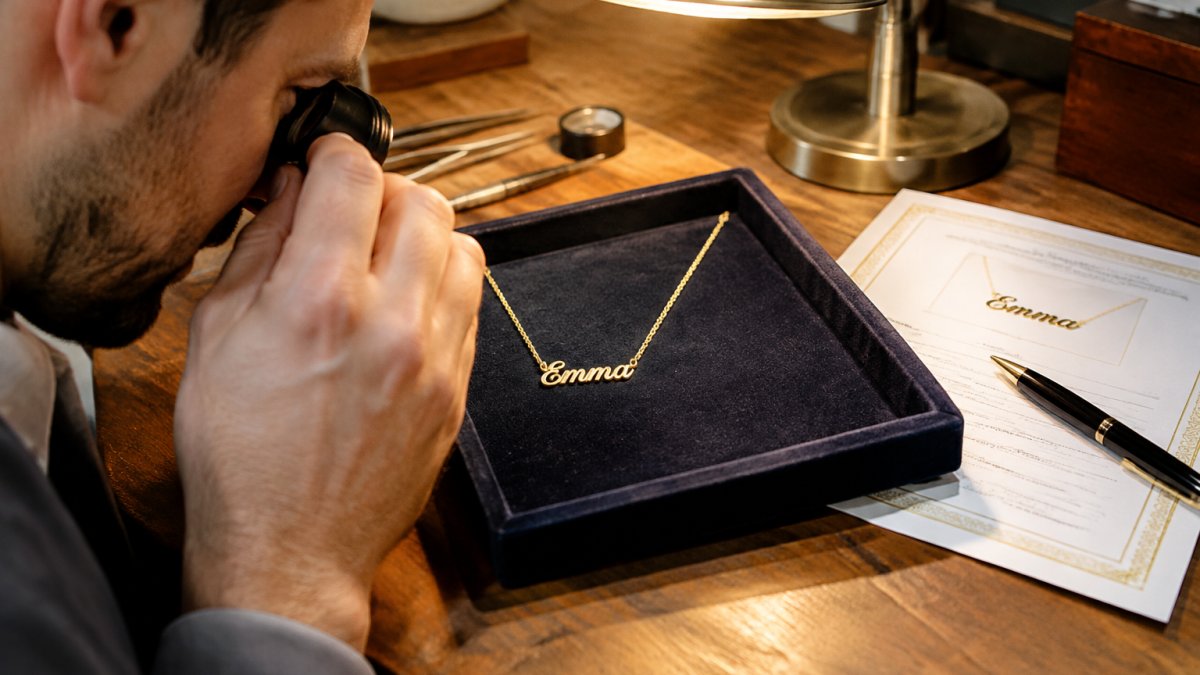
Start with an independent appraiser, not the store that sold the piece. Ask for a detailed report. It should list the metal, stones, carat weights, and workmanship.
Knowing what makes a piece high quality helps you get a fair appraisal. Our guide on finding high quality custom keepsakes covers the details appraisers look for.
Step 2: Build Your Jewelry Insurance Claim Documentation
Strong documentation is what turns a stressful claim into a paid one. Gather it the day the piece arrives, not after a loss.
Your file should include:
- The original purchase receipt or invoice
- The appraisal certificate
- Clear current photographs from several angles
- An itemized description of the design and materials
Keep digital copies in the cloud. A common mistake is storing everything in one place, then losing it with the piece.
Step 3: Choose Between Homeowners Coverage and Standalone Jewelry Insurance
Homeowners or renters insurance may cover jewelry, but usually under a low sub-limit for theft (Special coverage for jewelry and other valuables). A standalone jewelry insurance policy covers the piece on its own terms.
Here is how the two compare:
| Feature | Homeowners/Renters | Standalone Policy |
|---|---|---|
| Theft limit | Low sub-limit | Full appraised value |
| Deductible | Applies | Often lower or none |
| Loss coverage | Limited | Broader |
| Claims impact | Hits home policy | Separate policy |
Standalone coverage can suit high-value or irreplaceable custom pieces. If you're also buying a new piece, our guide on how to buy custom jewelry online safely pairs well with setting up coverage.
Step 4: Understand What Your Policy Covers and Excludes
Read the policy before you pay a premium. Know what your coverage options actually include.
Most policies cover:
- Theft
- Accidental loss
- Damage
- Mysterious disappearance
Watch the exclusions. Common ones include normal wear and tear, and damage from poor storage. Check the coverage limit and deductible on each item.
Watch out: A policy that lists "scheduled coverage" per item protects you better than a blanket limit. Ask which one you're getting.
Step 5: Estimate Your Jewelry Insurance Cost
Jewelry insurance cost is usually quoted as an annual premium tied to your appraised value, but the number you pay is not simply a percentage of the appraisal. Insurers rate each piece on a mix of factors, and understanding them lets you compare quotes on equal footing instead of chasing the lowest headline premium.
What drives the premium:
- Appraised value: The insured amount is the starting point. A higher scheduled value means a higher premium, so an inflated appraisal costs you every year, not just at claim time.
- Deductible: A higher deductible lowers the premium. Run the math both ways, a $500 deductible on a $6,000 piece may cost only slightly less per year than a $250 deductible, in which case the lower deductible is usually the better trade.
- Where and how you wear it: Insurers may ask about storage (safe, vault, or none) and whether the piece is worn daily. A piece kept in a rated safe when not worn can rate lower than one that lives in a jewelry box.
- Claims history: Prior jewelry claims can affect pricing, much like auto or home claims.
- Geographic rating: Premiums vary by state because insurers file rates by jurisdiction; two identical pieces can quote differently across state lines.
How to compare quotes:
- Request quotes on the same appraised value and the same deductible so the premiums are comparable.
- Ask each insurer whether the policy pays agreed value (a set dollar amount) or replacement cost (the cost to replace with a comparable piece). The settlement method changes what the premium is actually buying.
- Confirm whether the quote includes coverage during transit and while the piece is with a jeweler for repair, some policies exclude these unless endorsed.
- Ask about the claims process and typical turnaround, since a cheap premium with a slow, documentation-heavy claim is a poor trade.
Watch out: A quote that is dramatically cheaper than the others often reflects a narrower settlement method, a higher deductible, or an exclusion for loss (covering only theft). Read the coverage summary, not just the premium.
For metal-heavy custom pieces, the appraised value tracks the gold or platinum content closely, so gold pricing movements can change what a like-for-like replacement costs. Our complete guide to custom gold jewelry explains how gold pricing works so your insured value stays grounded in current metal costs rather than a stale appraisal.
Step 6: Close the Gaps Around Production, Shipping, and Repairs
Coverage can be easy to overlook during the stages when a piece is being made, shipped, or repaired. Ask your insurer how coverage applies through each of these stages.
Ask your insurer these questions:
- Is the piece covered during transit?
- Who holds liability while a jeweler works on it?
- Does a repair change the appraised value?
For shipping, you can add package protection at checkout to guard against loss, theft, and damage in transit.
Step 7: File a Claim Without Losing Value
Filing a claim on a custom piece is where the policy wording you chose in Step 3 and the appraisal you obtained in Step 1 either pay off or fall short. The mechanics matter more than the paperwork, because a one-of-a-kind design often cannot be replaced with an identical item.
File promptly and in writing. Notify the insurer as soon as you notice the loss, then follow up in writing so there is a dated record. Submit the appraisal, the original receipt or invoice, and your photographs. Insurers may ask for a proof-of-loss form and, for theft, a police report.
Understand how the settlement method changes the payout:
- Agreed value: The policy pays the dollar amount scheduled on the policy, typically the appraised value, without a depreciation deduction. This is the cleaner outcome for a unique piece because the payout is fixed in advance.
- Replacement cost: The policy pays to replace the piece with a comparable item of like kind and quality. For custom work, "comparable" is the sticking point, the insurer may source a similar design rather than recreate yours exactly, and the payout is capped at the scheduled or appraised amount.
- Actual cash value: The policy pays replacement cost minus depreciation (Are there different types of policies?). On jewelry this can be a steep reduction, so confirm which method your policy uses before you need it.
When the original design cannot be recreated. This is the scenario general jewelry guides skip. If the maker has retired, the mold is gone, or the stones are no longer available, the insurer and you must agree on what "comparable" means. A well-documented appraisal that separates the value of the metal, the stones, and the workmanship gives you a defensible basis to negotiate a settlement that reflects the design, not just the raw materials. Ask in advance whether your policy permits a cash settlement at the agreed value when replacement is not feasible.
Keep the file current. An appraisal is a snapshot. If gold prices move sharply or you add stones, the scheduled value can drift from reality, and a claim pays on the scheduled amount. Reviewing appraisals periodically, and after a significant change in metal prices or a repair that alters the piece, is a sensible practice.
Watch out: Do not accept a replacement quote from a jeweler the insurer selects without comparing it to your appraisal. A comparable piece sourced at a discount may not match the workmanship or stone quality documented in your file, and once you accept the settlement the claim is closed.
Before problems arise, understand the custom jewelry return policy so you know your options, and keep your appraisal, receipt, and photos together in one cloud folder. A clean claim starts with a clean file.
Protecting a one-of-a-kind piece takes a little paperwork and the right coverage. Lynrix.com makes the sentimental side easier with personalized jewelry built to be treasured, from our Classic Heart Style Name Necklace to our Classic Style Name Necklace, each custom made with up to 10 characters and packaged in a soft touch gift box. Get started with Lynrix.com and give a gift worth protecting.
Frequently Asked Questions
How much does it cost to insure a piece of jewelry?
Premiums depend on the appraised value, deductible, and location, so ask insurers for a quote on your specific piece. Rates depend on the appraised value, your deductible, and where you live. Ask for a quote with two deductible levels so you can see how the premium and out-of-pocket cost trade off.
Do I need an appraisal to insure custom jewelry?
Yes, in almost every case. A jewelry insurance appraisal gives the insurer a documented value and an itemized description of the piece, including metal, stones, dimensions, and workmanship. Because a one-of-a-kind piece has no standard retail price, the appraiser's written valuation is what the policy is built on. Get the appraisal before you apply for coverage, and ask whether the insurer wants agreed value or replacement value so the appraisal reflects the right number.
Does homeowners insurance cover custom jewelry?
It covers it only partially. Standard homeowners and renters policies often cap theft of jewelry at a low sub-limit; check your policy for the exact amount. Accidental loss and mysterious disappearance are usually excluded entirely. To cover a custom made jewelry piece properly, schedule it on your homeowners policy or move it to standalone jewelry insurance, which typically covers theft, loss, and damage without the low sub-limit.
What should I do if my custom piece is damaged during shipping?
Photograph the parcel before opening it, then photograph the damage and keep every piece of packaging. Report the damage to the seller within their stated window and file a claim with the carrier if the shipment was insured. Package protection is available at checkout for $2.98 and covers loss, theft, and damage in transit. Save the order confirmation and tracking number as part of your jewelry insurance claim documentation.


