


Table of Contents
- Why Proper Care Matters for Sterling Silver Keepsakes
- What You'll Need Before You Start Cleaning
- How to Clean Silver Jewelry with Dish Soap and Warm Water
- The Baking Soda and Aluminum Foil Method for Tarnish Removal
- How to Clean Silver Jewelry with Gemstones and Pearls
- Using a Silver Polishing Cloth for Jewelry
- How to Prevent Sterling Silver from Tarnishing
- Common Mistakes to Avoid When Cleaning Sterling Silver Keepsakes
- Frequently Asked Questions
Last Updated: October 18, 2026
Why Proper Care Matters for Sterling Silver Keepsakes
Sterling silver keepsakes hold more than monetary value. They mark anniversaries, celebrate milestones, and connect us to people we love. A tarnished piece loses its shine and, with it, some of its emotional impact.
Proper care keeps those pieces looking as meaningful as the day they arrived. This guide walks you through safe, effective techniques for cleaning your sterling silver keepsake jewelry at home.
Tarnish forms naturally on sterling silver over time. It's a dark layer that builds up from exposure to air and moisture. The right cleaning method removes tarnish without scratching delicate engravings or damaging gemstones that might be set into the piece.
What You'll Need Before You Start Cleaning
Gather your supplies before you begin. The items you need depend on which cleaning method you choose. Most household ingredients work just as well as specialty products.
Basic supplies for any method:
- Soft, lint-free cloth for drying
- Soft-bristled brush (old toothbrush works fine)
- Warm water
- A clean bowl or container
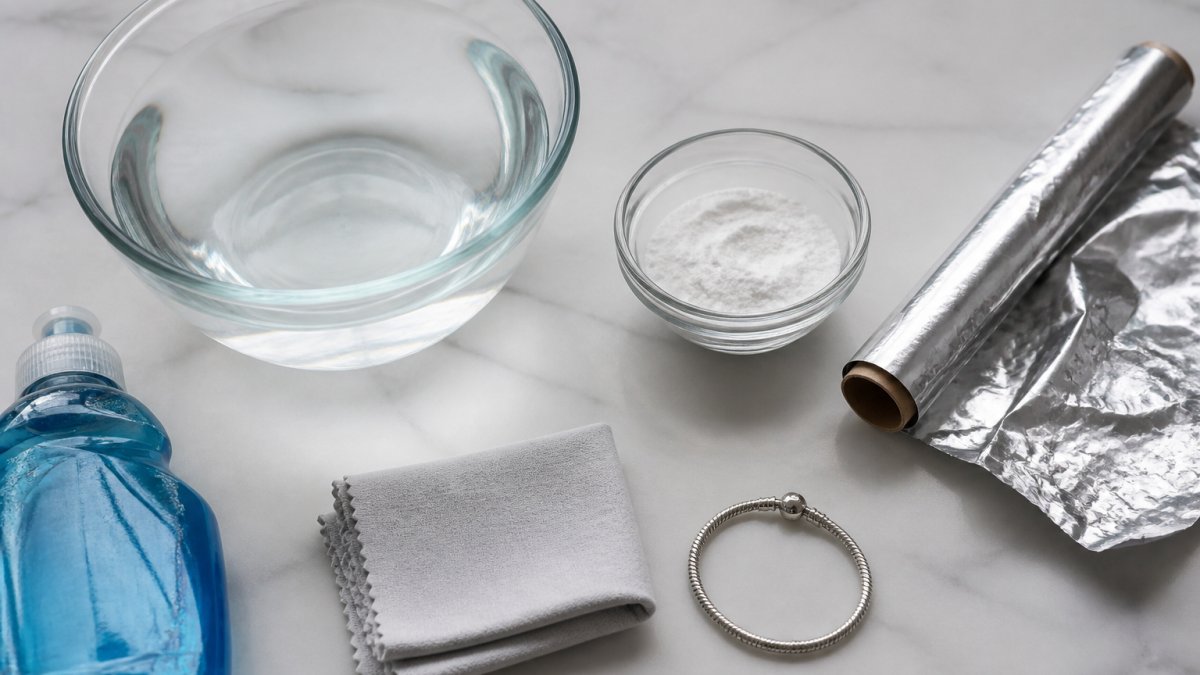
Household Ingredients and Tools
Most effective cleaning methods use items already in your home. You likely have everything needed without buying specialty products.
- Mild dish soap (plain, unscented works best)
- Baking soda (for tarnish removal)
- Aluminum foil (pairs with baking soda for a chemical reaction)
- White vinegar (optional, for stubborn tarnish)
- Soft cloths or microfiber towels
- Soft-bristled brush or old toothbrush
Avoid harsh scrubbers, scouring pads, or abrasive cleaners. These scratch the silver surface and can destroy fine details like engravings.
Safety Precautions for Sentimental Pieces
Your keepsake is irreplaceable. Take precautions to protect it during cleaning.
Before you clean:
- Check for gemstones, pearls, or other materials set into the piece
- Examine engravings or delicate details
- Test your chosen method on a less visible area first if you're unsure
During cleaning:
- Use gentle pressure, never scrub hard
- Keep the piece over a soft surface in case you drop it
- Work in good lighting so you can see what you're doing
- Never soak pieces with pearls, opals, or certain gemstones
After cleaning:
- Dry immediately with a soft cloth
- Don't let the piece air-dry, as water spots can form
How to Clean Silver Jewelry with Dish Soap and Warm Water
This method is the safest for any sterling silver piece, including those with gemstones. It removes light to moderate tarnish and everyday grime without harsh chemicals.
Step-by-Step Instructions
Step 1: Prepare Your Cleaning Solution Fill a bowl with warm (not hot) water. Add a small squirt of mild dish soap.
Step 2: Soak Your Jewelry Place your sterling silver keepsake jewelry in the soapy water. Let it soak for 2 to 5 minutes.
Step 3: Gently Scrub Use a soft-bristled brush to gently clean the piece. Focus on crevices and detailed areas where dirt collects.
Step 4: Rinse Thoroughly Hold the piece under running water and rinse away all soap residue.
Step 5: Dry Completely Pat the piece dry immediately with a soft, lint-free cloth. Don't let it air-dry, as water spots can form.
When to Use This Method
Use the dish soap method for:
- Light tarnish and everyday grime
- Any piece with gemstones, pearls, or delicate materials
- Pieces with engravings or fine details
- Regular maintenance between deeper cleanings
This method is gentle and effective for most keepsakes. It won't damage anything when done carefully.
The Baking Soda and Aluminum Foil Method for Tarnish Removal
This method works through a chemical reaction that lifts tarnish from the silver surface. It's powerful for heavy tarnish but requires more care with delicate pieces.
Step-by-Step Instructions
Step 1: Line Your Container Cut a piece of aluminum foil and line the bottom of a bowl.
Step 2: Add Water and Baking Soda Pour warm water into the bowl until it's about halfway full.
Step 3: Place Your Jewelry Lay your sterling silver keepsake jewelry directly on the aluminum foil.
Step 4: Soak Let the piece soak for 15 to 30 minutes, depending on how heavy the tarnish is.
Step 5: Remove and Rinse Lift the piece out carefully. Rinse it thoroughly under running water to remove all baking soda residue.
Step 6: Dry and Buff Pat the piece dry with a soft cloth.
Why This Method Works
The aluminum foil acts as a sacrificial material in a chemical reaction. The baking soda creates an alkaline solution. Together, they pull tarnish (oxidation) from the silver surface and transfer it to the foil. This happens without scrubbing or harsh chemicals.
This method is fast and effective for heavy tarnish. However, avoid it for pieces with gemstones that shouldn't soak, pearls, or delicate materials. The alkaline solution can damage certain stones.
How to Clean Silver Jewelry with Gemstones and Pearls
Mixed-material pieces need special care. Gemstones and pearls have different durability than silver and can be damaged by water, soaking, or certain solutions.
Safe Cleaning for Mixed Materials
Many gemstones are porous or sensitive to water. Pearls, in particular, can lose their luster if soaked. Opals, emeralds, and turquoise are also vulnerable.
The safest approach for any mixed-material piece:
- Use only the mild dish soap and warm water method
- Limit soaking to 2 to 5 minutes maximum
- Keep the gemstone or pearl as dry as possible
- Avoid using the baking soda method on these pieces
For pieces with delicate gemstones, skip soaking altogether. Instead, dampen a soft cloth with soapy water and gently wipe the silver around the stone. This removes grime without exposing the stone to prolonged moisture.
Stones to Avoid Soaking
Never soak sterling silver keepsake jewelry containing:
- Pearls (freshwater, saltwater, or cultured)
- Opals
- Emeralds
- Turquoise
- Coral
- Amber
- Tanzanite
These materials can absorb water, swell, crack, or lose their finish. If your piece contains any of these, use only the gentle damp-cloth method or consult a professional jeweler.
Harder stones like diamonds, sapphires, and rubies tolerate the dish soap method better. However, if you're unsure about your specific piece, err on the side of caution. A gentle wipe-down takes longer but protects your keepsake.
Using a Silver Polishing Cloth for Jewelry
A polishing cloth designed for silver is one of the easiest tools for maintenance. It removes light tarnish and restores shine without water or chemicals.
Polishing cloths work by using a mild abrasive built into the fabric. This abrasive is gentler than traditional silver polish and removes tarnish through light friction.
How to use a polishing cloth:
- Unfold the cloth and lay it flat
- Gently rub your sterling silver keepsake jewelry on the cloth with light pressure
- Use straight strokes, not circular motions
- Flip the cloth to a clean section as it darkens
- Continue until the piece regains its shine
How to Polish Without Damaging Engravings
Engravings require a lighter touch. Polishing cloth friction can smooth away fine details if you press too hard.
For pieces with engravings:
- Use very light pressure
- Rub along the direction of the engraving, not across it
- Focus the cloth on flat surfaces first
- Gently brush the cloth along grooved areas without pressing
- Stop if you feel resistance
Polishing cloths are ideal for regular maintenance between deeper cleanings. They work best on light tarnish. For heavy buildup, use the baking soda method first, then finish with a polishing cloth.
How to Prevent Sterling Silver from Tarnishing
Prevention is easier than removal. Tarnish forms when silver reacts with oxygen and moisture in the air. Controlling these factors slows the process significantly.
Storage Best Practices
Where and how you store your sterling silver keepsake jewelry matters. Proper storage can extend the time between cleanings by months.
Store in:
- A dry, cool place away from direct sunlight
- An airtight container, sealed bag, or jewelry box with a tight lid
- A drawer or closet rather than an open shelf
Avoid storing near:
- Bathrooms (humidity promotes tarnish)
- Windows (sunlight can fade gemstones)
- Kitchen areas (salt and moisture accelerate tarnish)
- Heating vents or air conditioning units
Individual sealed bags work well for pieces you wear less often. For daily-wear items, a closed jewelry box keeps them protected while remaining accessible.
Reducing Air Exposure and Humidity
Tarnish develops faster in humid environments. Moisture in the air speeds oxidation.
Simple steps to reduce tarnish:
- Keep your jewelry in a sealed container rather than displayed
- Use silica gel packets in your storage container (the same packets that come in new product boxes)
- Store pieces separately so they don't touch each other
- Keep your storage area dry and cool
- Consider a small dehumidifier if you live in a very humid climate
Pieces you wear regularly tarnish more slowly because body oils and friction create a protective layer. Pieces stored unworn tarnish faster. This is normal and doesn't indicate a problem with the silver quality.
If you wear your sterling silver keepsake jewelry frequently, you may only need to clean it every few months. Stored pieces might need cleaning once or twice a year.
Common Mistakes to Avoid When Cleaning Sterling Silver Keepsakes
Even with good intentions, certain habits damage silver or reduce its lifespan.
Using abrasive cleaners or scrubbers: Scouring pads, steel wool, and harsh powders scratch the silver surface.
Soaking pieces with gemstones: Water exposure damages pearls, opals, emeralds, and other porous stones.
Leaving wet silver to air-dry: Water spots form when silver dries without being buffed.
Storing silver in plastic wrap: Plastic can trap moisture and accelerate tarnish.
Ignoring engravings during cleaning: Tarnish builds up in grooves.
The goal when you clean sterling silver jewelry is to restore shine while preserving the piece's integrity.
Keeping your sterling silver keepsake jewelry clean and protected ensures it stays meaningful for years to come.
Frequently Asked Questions
Can you clean sterling silver jewelry with dish soap and water?
Yes. Mild dish soap and warm water is one of the safest methods for cleaning sterling silver jewelry at home. Fill a bowl with warm water, add a few drops of mild dish soap, soak the jewelry for 5-10 minutes, gently scrub with a soft-bristled brush, rinse thoroughly under running water, and dry completely with a soft cloth. This method works well for jewelry without gemstones or pearls and is ideal for regular maintenance to prevent buildup.
How do you clean silver jewelry with gemstones or pearls?
For sterling silver keepsake jewelry with gemstones or pearls, avoid soaking and use only the gentle dish soap method. Dampen a soft cloth with the soapy solution and wipe the silver gently without submerging the piece. Pearls and some gemstones like opals can absorb water and become damaged. For heavily tarnished pieces with stones, consult a professional jeweler rather than risk damage to irreplaceable keepsakes.
What is the safest way to clean tarnished sterling silver?
The safest approach depends on your jewelry's materials. For solid sterling silver without gemstones, the baking soda and aluminum foil method removes tarnish effectively without scratching. For keepsakes with stones or delicate engravings, stick with mild dish soap and warm water. Always rinse thoroughly, dry completely, and store in a dry place. If your keepsake has mixed materials or oxidized finishes you want to preserve, seek professional cleaning to avoid unintended damage.
How do you prevent sterling silver from tarnishing?
Store sterling silver jewelry in airtight containers, zip-lock bags, or jewelry boxes lined with anti-tarnish cloth to minimize air exposure. Keep pieces away from humidity, moisture, and direct sunlight. Wear your keepsakes regularly when possible, as body oils naturally slow tarnishing. Avoid storing near rubber bands, elastic, or materials containing sulfur. For long-term storage, use silica gel packets or anti-tarnish strips inside your storage container to absorb moisture and slow oxidation.


