


Table of Contents
- Custom Jewelry vs Mass Produced Watches: A Side-by-Side Comparison
- How Custom Jewelry Is Made: From CAD Design to Hand Assembly
- How to Choose Custom Jewelry That Fits the Occasion
- Benefits of Custom Jewelry for Milestone Gifting
- Mass Produced Watches: Precision Engineering, Lead Times, and Limits
- Resale Value, Repairability, and the Hybrid Production Model
- Which Should You Buy? A Decision Framework
- Frequently Asked Questions
Last Updated: September 12, 2026
Custom Jewelry vs Mass Produced Watches: A Side-by-Side Comparison
Custom jewelry is a piece made to your specifications, while a mass produced watch is manufactured in standardized runs to a fixed design. That distinction shapes everything else: cost, lead time, repairability, and how the piece holds up over years of wear. This guide from Lynrix.com breaks down both paths so you can choose with confidence.
The comparison matters most at the moment of purchase. A personalized gift carries meaning a shelf item cannot, but it also carries different trade-offs in quality control and service. Below, we compare how each is made, what each costs, and which occasions suit which choice.
| Factor | Custom Jewelry | Mass Produced Watches |
|---|---|---|
| Design | Made to your specification | Standardized designs |
| Lead time | Longer, varies by complexity | Usually ships immediately |
| Unit cost | Higher per piece | Lower via economies of scale |
| Personalization | Engraving, stone choice, sizing | Limited or none |
| Repairability | Bench jeweler serviceable | Depends on parts availability |
| Best for | Milestones, sentimental gifts | Everyday wear, gifting at scale |
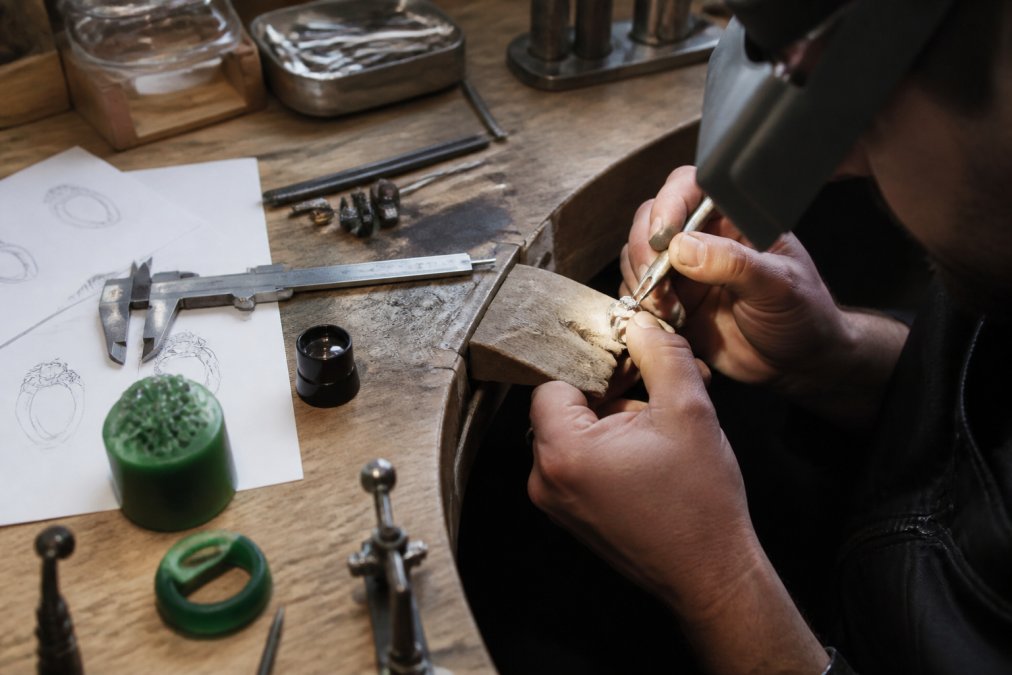
How Custom Jewelry Is Made: From CAD Design to Hand Assembly
How to Choose Custom Jewelry That Fits the Occasion
Match the piece to the moment. The question is not "what is most expensive" but "what will this person actually wear."
When learning how to choose custom jewelry, start with three inputs: the recipient's style, the occasion's formality, and your budget ceiling.
- Milestone gifting: engraved bands, pendants, or a personalized watch with a dated message
- Everyday wear: sturdy clasps, hardened mineral crystal, water resistance rated for daily use
- Long-distance keepsakes: paired items with matching inscriptions to bridge the gap
Benefits of Custom Jewelry for Milestone Gifting
The benefits of custom jewelry come down to specificity. A mass-market piece says "I thought of you." A personalized piece says "I thought of you, and I remembered this." That difference is why custom gifts tend to be kept rather than returned.
Personalization also solves a practical gifting problem. Generic presents get re-gifted; engraved ones do not. If you are shopping for a parent, a partner, or a grandparent, an inscription turns an accessory into a keepsake.
Lynrix.com carries engraved timepieces designed for exactly this use, from the Dad's Love - Wooden Watch in sandalwood and leather to the I Will Love You Until the End of Time watch with a custom message on the case back.

Mass Produced Watches: Precision Engineering, Lead Times, and Limits
Mass produced watches win on speed and price consistency, but the engineering story underneath is more interesting than "factory line equals cheap." Understanding how these watches are actually built explains both their strengths and the limits you hit two or three years in.
How a mass produced watch is assembled
A typical factory watch moves through five stages: case and bracelet machining, dial printing, movement assembly, movement-to-case fitting (called "casing"), and final timing regulation. Each stage runs on a dedicated line, and units are produced in batches of hundreds to tens of thousands. That batching is what pushes unit cost down, the tooling, molds, and CNC programs are amortized across the whole run.
Movements fall into two broad families:
- Quartz movements use a battery, a quartz oscillator, and a stepping motor. They are accurate to roughly ±15 seconds per month in typical consumer grades, need a battery change every two to three years, and are usually replaced rather than repaired when they fail (peer-reviewed research).
- Mechanical movements (hand-wound or automatic) use a mainspring, gear train, and escapement. They are less accurate day-to-day, many consumer-grade automatics run within about -20 to +40 seconds per day, but they can be regulated, serviced, and rebuilt by a watchmaker (peer-reviewed research).
Most mass produced watches in the gift and fashion tier use quartz. That is not a defect; it is a deliberate trade-off favoring accuracy, low maintenance, and low cost over long-term serviceability.
Tolerance and quality control
Factory lines hold tight dimensional tolerances because the same CNC program cuts every case. Case-to-bezel gaps, crown threading, and crystal seating are consistent unit to unit. What varies is finishing: polishing compounds, dial printing registration, and bracelet link fit are the places where a lower price point shows.
Quality control is typically sampling-based rather than piece-by-piece. A batch is inspected, not every individual watch. That is why two identical models can arrive with slightly different bezel alignment or date-wheel centering.
Lead times and the parts-availability trap
Lead time is the headline advantage. In-stock models ship same-day or within a few business days; made-to-order factory runs can take four to twelve weeks depending on the brand and the region.
The limit shows up later. Replacement parts, crystals, crowns, gaskets, proprietary bracelets, and especially movement modules, are produced only while the model is in the catalog. Once a reference is discontinued, parts inventory dries up. A local watchmaker may be able to swap a gasket or a generic crystal, but a proprietary integrated bracelet or a branded quartz module often cannot be sourced at all. At that point the watch becomes a wear-until-it-stops item rather than a serviceable one.
- Strengths: fast lead time, consistent dimensional quality, low entry price, high accuracy in quartz grades
- Weaknesses: no customization, sampling-based QC, limited long-term repairability, thin resale liquidity outside recognized collectible references
- Best for: everyday wear, corporate gifting at volume, first watches, and any purchase where the deadline is under two weeks
Resale Value, Repairability, and the Hybrid Production Model
Most comparisons stop at the receipt. The more useful question is what happens in year three, year ten, and year thirty, because resale liquidity, repairability, and the rise of hybrid production are the three factors that separate a piece you keep from a piece you replace.
Resale value and secondary-market liquidity
Resale splits by category, and the split is driven by liquidity, not by craftsmanship.
- Mass produced watches trade on a deep but narrow secondary market. A recognized collectible reference, a discontinued dive model, a limited anniversary edition, a well-documented vintage piece, can hold or gain value because buyers actively search for it by reference number. Everything else trades at a steep discount the moment it leaves the box, because there are hundreds of identical units listed at once and no scarcity to anchor the price.
- Custom jewelry has a thin secondary market by design. A piece engraved with someone else's name or sized to someone else's finger has almost no resale audience. What persists is material value: the melt value of the gold, platinum, or silver, plus the market value of any sizable, well-cut stones. A custom piece rarely resells for what it cost to make, but the metal content gives it a floor that a fashion watch does not have.
The practical takeaway: buy custom for meaning and material floor, buy mass produced for utility, and buy a recognized collectible reference only if resale is the actual goal.
Repairability: bench-serviceable vs parts-dependent
Repairability is where custom work pulls ahead, and the reason is structural rather than sentimental.
A mass produced watch depends on a parts pipeline. Gaskets, crystals, crowns, and movement modules are model-specific. When the pipeline is open, service is cheap and fast. When the reference is discontinued, the pipeline closes and the watch becomes effectively unrepairable at the brand level. Independent watchmakers can sometimes substitute generic parts, but integrated bracelets, proprietary case shapes, and branded quartz modules usually cannot be substituted.
A useful rule of thumb: the more integrated the design, the harder it is to repair. That applies to watches and to jewelry alike.
The hybrid production model
The hybrid model is the fastest-growing category in both jewelry and watches, and it is the answer for buyers who want personalization without full bespoke pricing or lead times.
In watches, hybrid means a standardized base with a personalized finish: a stock quartz or mechanical movement in a stock case, paired with a custom-engraved case back, a personalized dial, or a bespoke strap. The buyer gets the emotional payload of customization, a name, a date, a message, at a price close to the mass-market tier.
The trade-off is honest: a hybrid piece is not fully bespoke, and it will not have the resale characteristics of either a one-off custom commission or a recognized collectible reference. What it does deliver is most of the personalization value at a fraction of the bespoke lead time.
Federal Trade Commission guidance on jewelry and precious-metal advertising claims

Which Should You Buy? A Decision Framework
Choose a personalized gift when it marks a milestone and the recipient will wear it often. Choose a mass produced watch when speed, budget, or volume matter more than personalization. If you want both, the hybrid route covers most cases.
Use this framework:
- Is this a milestone or a routine occasion? Milestone points to a personalized gift.
- Does the recipient wear jewelry or watches regularly? If yes, personalization pays off.
- Is your deadline under two weeks? If yes, favor in-stock options.
- Do you need more than five identical units? Mass production wins on cost.
- Will the piece need resizing or repair later?
Lynrix.com pairs both paths in one catalog, from the All That You Do - Openwork Watch with its skeleton dial to the A Son's First Hero chronograph built for daily wear.

Frequently Asked Questions
Is custom jewelry worth the higher price point?
It depends on what you want the piece to do. Personalized gifts carry a design and labor premium. Mass produced watches spread the same tooling cost across thousands of units, so they cost less per item. If the gift needs to carry a name, a date, or a message, a personalized item is the only route that delivers it. If you want a recognizable brand on a wrist, a mass produced watch wins on price.
How does the resale value of custom jewelry compare to mass produced watches?
Mass produced watches from established brands hold value better on the secondary market because buyers can verify the model and serial number. A custom piece engraved with a name or a private message has almost no resale liquidity, since the personalization is the point. Precious metal content, such as 14k or 18k gold, retains scrap value, but the design premium usually does not come back. Treat custom jewelry as a keepsake, not an investment piece.
Does custom jewelry offer better durability than mass produced accessories?
Not automatically. Durability comes from material integrity and construction, not from how the piece was ordered. Ask what alloy is used and whether the piece can be repaired by any bench jeweler or only by the original maker.
What factors should you consider when choosing between a personalized gift and a brand-name watch?
Start with the occasion and the lead time. Engraved and custom pieces typically need one to three weeks, while a stocked watch ships in days. Next, weigh personalization against recognition: a name or date on the case back means more to a partner or parent than a logo does. Finally, check the maintenance path. Watches need battery or movement service and gasket replacement, while jewelry usually needs only occasional polishing and prong tightening.
Can a mass produced watch still feel personal?
Yes, when the personalization is built into the piece rather than added afterward. A watch with an engraved case back, a message on the dial, or a presentation box printed with a date carries the same sentimental weight as custom jewelry. The hybrid production model works this way: a factory-made movement and case, paired with a one-off engraving or dial treatment. You get precision engineering and a lower price than full bespoke work.
Choosing between custom jewelry and a mass produced watch is really a question about intent. If the gift needs to say something specific, personalize it. Lynrix.com offers engraving, gift-boxed shipping, and a range of timepieces built for milestones, from the sandalwood Dad's Love watch to the engraved chronograph line. Shop now and give something they will keep.


