


Table of Contents
- Define Your Design Vision Before You Commission Custom Jewelry
- Best Metals for Custom Jewelry: Durability and Aesthetics
- Choosing Gemstones: Diamond Clarity, Carat Weight, and Lab-Grown Options
- Understanding the Custom Jewelry Design Process
- Custom Jewelry Price Factors: Setting a Realistic Budget
- Contracts, Appraisals, and Ethical Sourcing for Custom Jewelry
- Maintaining Your Custom Piece for Heirloom-Quality Longevity
- Frequently Asked Questions
Last Updated: August 27, 2026
Define Your Design Vision Before You Commission Custom Jewelry
The biggest mistake people make when ordering custom jewelry is skipping this step entirely. They jump straight to metal choices and stone shapes without articulating what the piece is supposed to mean, ending up with something technically well-made but emotionally flat.
Custom jewelry is a bespoke, one-of-a-kind piece designed around a specific person, occasion, or story. Getting that right starts with design vision, not materials. At Lynrix.com, we've worked with gift shoppers across every milestone, and the clearest signal of a successful custom commission is always the same: the buyer came in knowing what they wanted the piece to say, not just what they wanted it to look like.
Identify the Occasion and Recipient
Start with two questions: Who is this for, and what should they feel when they open it?
A custom engagement ring carries different weight than a graduation gift or Mother's Day keepsake. The occasion shapes everything downstream: scale, formality, ornamentation level, and how much personalization is appropriate. Write down three adjectives describing the recipient's style before approaching any designer. That simple exercise eliminates roughly half the decision-making that stalls the custom jewelry design process.
Match Style to Lifestyle and Daily Wear
A common mistake is designing for the occasion rather than the person's actual life. A delicate pavé-set ring is stunning in a velvet box but a maintenance headache on someone who works with their hands every day.
Ask yourself: Does this person wear jewelry daily or only on special occasions? Do they have an active lifestyle? Are they drawn to minimalist or ornate designs? Lifestyle suitability is the filter through which every other design decision should pass.
Best Metals for Custom Jewelry: Durability and Aesthetics
Choosing the right metal comes down to three factors: durability, aesthetics, and how the alloy composition interacts with the wearer's skin and lifestyle.
Gold Alloys and Karat Ratings
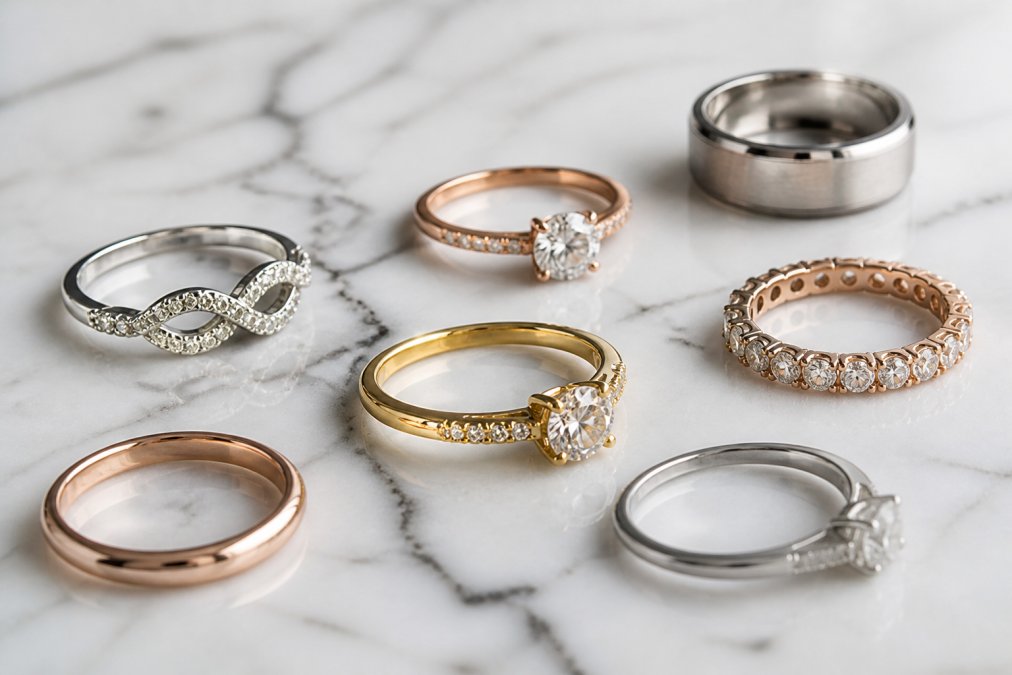
Pure gold is too soft for daily wear. Jewelers mix it with other metals to increase hardness, which is where karat ratings come in. According to GIA's guide to gold karat and alloy composition, 24-karat gold is 99.9% pure, while 18-karat gold contains 75% gold and 14-karat gold contains 58.3% gold.
For most people commissioning a custom piece for regular wear, 14-karat or 18-karat gold is the practical sweet spot. Higher karat gold has richer color but scratches more easily. Lower karat alloys are harder but may cause reactions in people with metal sensitivities.
Rose gold gets its warm tone from copper. White gold is typically alloyed with palladium or nickel and often rhodium-plated for brightness. The plating on white gold wears over time and requires periodic re-plating, which is worth factoring into long-term maintenance costs.
Sterling Silver, Platinum, and Alternative Metals
Sterling silver is 92.5% pure silver alloyed with copper for hardness. It's accessible for custom jewelry on a tighter budget but tarnishes with exposure to air and moisture, requiring regular polishing.
Platinum is the most durable precious metal used in jewelry fabrication. It's denser than gold, hypoallergenic, and holds prong settings exceptionally well, making it ideal for custom engagement rings with significant stone settings. The trade-off is cost: platinum commands a higher price per gram than gold.
Alternative metals like palladium, titanium, and tungsten have grown in popularity for custom men's jewelry, offering excellent durability at lower cost. Titanium and tungsten cannot be resized after fabrication, which matters for rings.
Choosing Gemstones: Diamond Clarity, Carat Weight, and Lab-Grown Options
Gemstone selection is where many buyers feel most out of their depth. Here is what actually matters.
For diamonds, the four standard grading criteria are cut, color, clarity, and carat weight. Cut has the most impact on how a stone looks in person. Clarity grades the presence of internal inclusions, with the GIA diamond clarity scale running from Flawless down through Included grades. For most custom jewelry, a VS2 or SI1 clarity grade offers excellent value because inclusions at those grades are typically invisible to the naked eye.
Carat weight measures mass, not size. A well-cut stone of lower carat weight will often appear larger and more brilliant than a poorly cut stone of higher weight.
Lab-grown gemstones are chemically and physically identical to mined stones and typically cost significantly less. The main consideration is resale value: lab-grown diamonds have depreciated more steeply in the secondary market than natural diamonds. For a piece meant as a personal keepsake, that may be irrelevant.
For colored stones, ask specifically about treatment status. Many rubies, sapphires, and emeralds are heat-treated to enhance color, which is standard practice. Gemstone certification from a reputable lab documents treatment status clearly.
Understanding the Custom Jewelry Design Process
The custom jewelry design process moves through four distinct phases: consultation, design development, production, and delivery. Understanding each phase prevents frustration from mismatched expectations.
Design Consultation and Concept Development
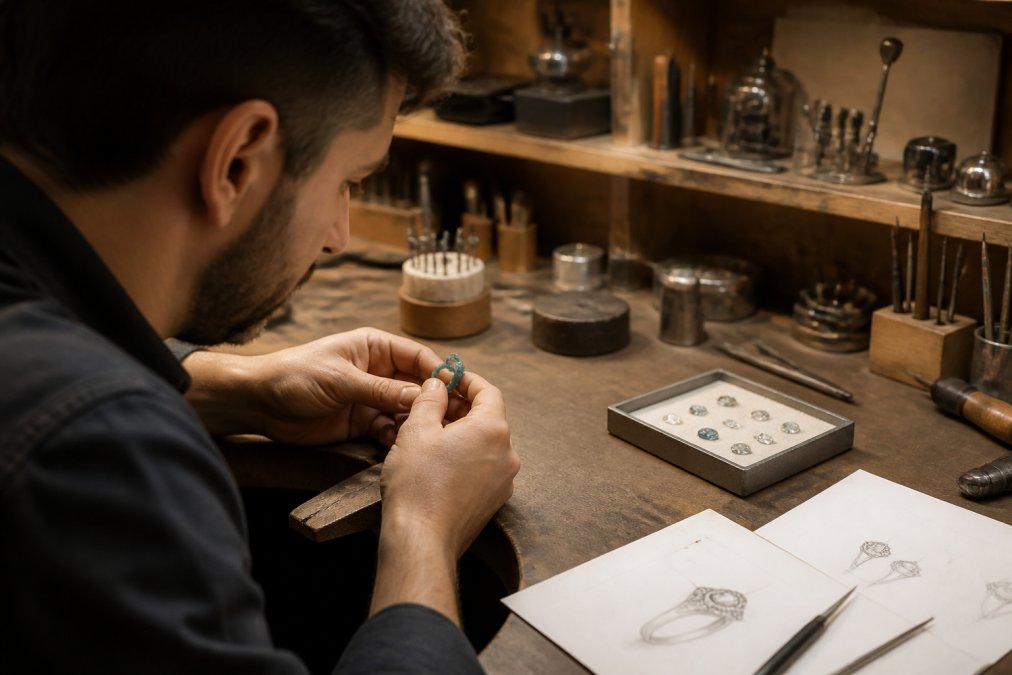
The initial design consultation is where your vision gets translated into a workable brief. A good designer will ask about occasion, recipient, lifestyle, budget, preferred metals, and any existing pieces the new jewelry should complement.
Bring reference images. A mood board of pieces you admire communicates aesthetic direction far more precisely than words alone. Pointing to what you like and what you don't is equally useful.
CAD Rendering vs. Physical Wax Models
Most contemporary jewelry designers use CAD rendering to produce a detailed digital visualization before any metal is cast. Changes at this stage cost time but not materials.
Physical wax models, produced from the CAD file via 3D printing, take the process further. Wearing or holding a wax model gives a tactile sense of scale and weight that no screen image can replicate. For high-value custom pieces, requesting a wax model before casting is worth the additional step.
CAD rendering is faster and sufficient for most commissions. Wax models add a week or two to the timeline but are particularly valuable for complex pieces or first-time custom buyers.
Production Timeline: What to Expect
Realistic production timelines for custom jewelry typically range from three to eight weeks, depending on complexity, the designer's workload, and whether revisions are needed. Plan backward from your gifting date and build in buffer time.
Custom Jewelry Price Factors: Setting a Realistic Budget
Custom jewelry price factors fall into four categories: material costs, labor, design complexity, and the designer's market positioning.
| Price Factor | What Drives Cost | Budget Consideration |
|---|---|---|
| Metal choice | Platinum costs more than gold; gold costs more than silver | Choose karat and metal type early |
| Gemstone grade | Cut, clarity, carat, and origin all affect price | Lab-grown stones reduce stone cost significantly |
| Design complexity | More stone settings, intricate patterns, hand engraving | Simpler designs cost less without sacrificing personalization |
| Designer expertise | Established jewelers with hallmarking credentials charge more | Matches quality expectations to price tier |
| Production method | Hand fabrication vs. casting vs. CAD/3D print | Discuss with designer upfront |
A common approach is to set your total budget first, then work backward through material and design choices. A simple, well-executed design in quality metal outperforms an overcomplicated design in lesser material every time.
Personalized design elements like engraving, custom hallmarking, and hand-finishing add cost but are often the details that make a piece feel genuinely bespoke. They are generally worth prioritizing over upgrading a gemstone by half a clarity grade.
Visit Lynrix.com to explore personalized jewelry options across a range of price points, with details on current offerings and pricing.
Contracts, Appraisals, and Ethical Sourcing for Custom Jewelry
This is the section most guides skip. It's also where buyers lose the most money when things go wrong.
What a Custom Commission Contract Should Include
A custom commission contract protects both parties. Before you pay any deposit, the agreement should document:
- A detailed description of the piece, including metal type, karat, gemstone specifications, and setting styles
- The agreed design renderings or approved wax model sign-off
- Total price, deposit amount, and payment schedule
- Production timeline with a specific delivery date
- Revision policy: how many rounds of changes are included, and what additional revisions cost
- What happens if the designer cannot complete the commission
- Return and dispute resolution terms
A written agreement is the professional standard for any commission above minimal value. The Federal Trade Commission guidelines on jewelry industry practices outline disclosure standards that reputable jewelers follow, including accurate representation of metal content and gemstone treatments.
Jewelry Appraisal, Resale Value, and Gemstone Certification
A jewelry appraisal is a written document produced by a credentialed appraiser that establishes the replacement value of a piece. For insurance purposes, obtain an appraisal within 30 days of receiving a custom piece. The appraisal value and the price you paid are often different figures; appraisals reflect retail replacement cost.
Gemstone certification from an independent grading laboratory documents the stone's characteristics objectively. For any diamond above a meaningful carat weight, certification from a recognized laboratory provides independent verification.
Resale value for custom jewelry is generally lower than for standard fine jewelry because the design is specific to the original buyer. If resale value is a priority, discuss that with your designer at the outset.
Maintaining Your Custom Piece for Heirloom-Quality Longevity
Custom jewelry built to heirloom quality standards will last generations. Whether it actually does depends almost entirely on maintenance.
The most practical maintenance schedule involves cleaning at home every few weeks and a professional inspection once a year. Home cleaning for gold and platinum pieces typically means a gentle soak in warm water with mild dish soap, followed by light brushing with a soft toothbrush and thorough rinsing. Ultrasonic cleaners are effective but not safe for all stones; emeralds, opals, and pearls should never go in an ultrasonic cleaner.
Annual professional inspections check prong integrity. Prongs wear down with daily contact, and a loose prong is the leading cause of lost stones. A jeweler can re-tip worn prongs before they fail.
For pieces with rhodium plating on white gold, re-plating every one to two years restores the bright white finish. Sterling silver pieces need regular polishing; an anti-tarnish storage pouch extends the time between polishing sessions.
Store custom jewelry individually in a fabric-lined jewelry box with separate compartments or individual soft pouches to prevent scratching and stone chips.
For guidance on caring for specific gemstone types, the Gemological Institute of America's gem care library is the most comprehensive publicly available resource.
Choosing custom jewelry well requires a clear process. Decisions compound on each other, and a misstep early, like choosing a metal that doesn't suit the lifestyle or skipping a written contract, creates problems that are expensive to fix later. Lynrix.com offers a curated selection of personalized jewelry and custom gifts designed to make that process more accessible, with options across occasions and budgets. Browse the collection at Lynrix.com and shop now to find a piece that carries real meaning.
Frequently Asked Questions
What should I look for when commissioning custom jewelry?
Start by confirming the designer provides a written contract covering design approval, production timeline, deposit terms, and revision limits. Ask to see a CAD rendering or wax model before fabrication begins so you can approve the design. Request gemstone certification for any diamonds or colored stones, and ask about the metal's alloy composition and hallmarking. Also clarify the return or remake policy in case the finished piece doesn't match the approved design.
How long does the custom jewelry design process usually take?
Most custom jewelry commissions take four to eight weeks from initial consultation to delivery. Simple engraved or personalized pieces can be completed in one to two weeks. More complex bespoke designs involving CAD rendering, stone sourcing, and multiple revision rounds can extend to twelve weeks or more. Always confirm the production timeline in writing before placing a deposit, especially if the piece is needed for a specific occasion like an anniversary or birthday.
How do I choose the right metal for custom jewelry?
The best metal depends on durability needs, skin sensitivity, and aesthetic preference. Platinum is the most durable and hypoallergenic option, ideal for everyday wear. 14-karat gold balances hardness and gold content well for rings and bracelets. Rose gold suits warmer skin tones, while white gold or sterling silver works for cooler palettes. If the piece will be worn daily, avoid lower-karat alloys or plated metals, as they wear down faster and may require replating.
What is the difference between mass-produced and custom-made jewelry?
Mass-produced jewelry is manufactured in bulk using standardized molds, so sizing, stone placement, and design details are fixed. Custom jewelry is designed specifically for one person, allowing you to choose the metal, gemstone, setting style, engraving, and proportions. Custom pieces typically use higher-quality materials and craftsmanship, and they carry personal meaning that off-the-shelf items cannot replicate. They also hold stronger sentimental and often appraisal value over time.
This article was written using GrandRanker


