


Table of Contents
- Personalized Blankets vs Custom Quilts: Which Anniversary Gift Wins?
- At a Glance: Personalized Blankets vs Custom Quilts
- Key Differences: Construction, Materials, and Care
- Custom Photo Blankets for Couples: A Modern Romantic Gesture
- Handmade Anniversary Quilt Ideas: When Tradition Matters
- How to Preserve a Custom Anniversary Quilt for Generations
- Budget vs. Heirloom Quality: Making the Right Choice
- Frequently Asked Questions
Last Updated: September 9, 2026
Personalized Blankets vs Custom Quilts: Which Anniversary Gift Wins?
Choosing between personalized blankets vs custom quilts for anniversary celebrations often comes down to a single question: do you want a modern tribute or a traditional heirloom? Both options let you weave names, dates, and photos into a textile keepsake, but they differ sharply in construction, care, and the story they tell.
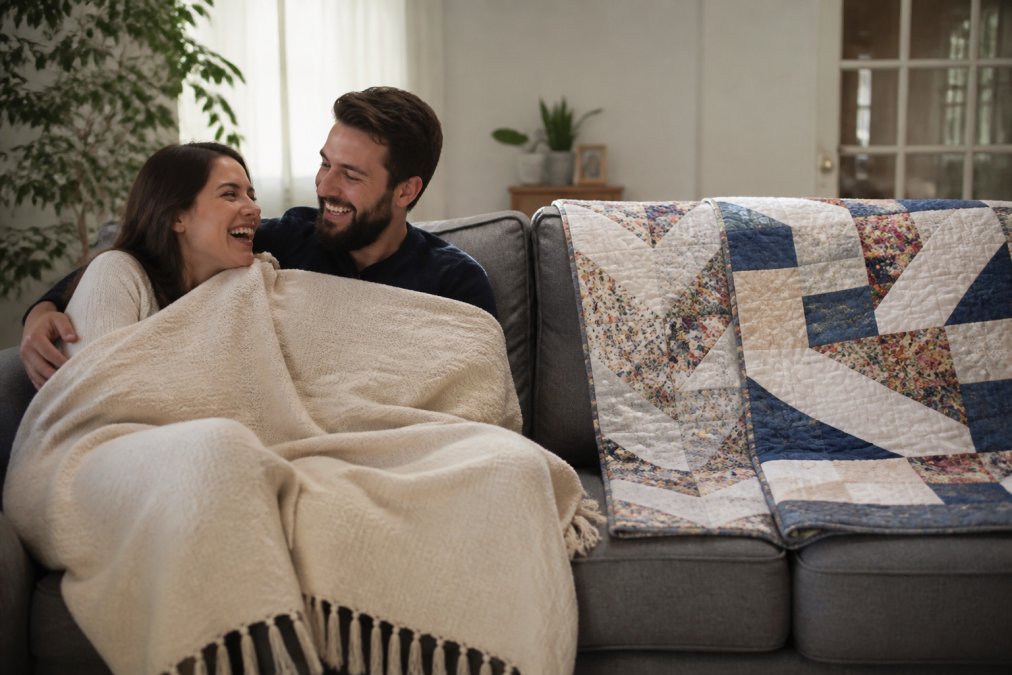
The real distinction is structural, not sentimental. A custom quilt is a layered textile sandwich of woven fabric, batting, and backing, stitched together to create warmth and depth. A personalized blanket, by contrast, is typically a single layer of woven or knit fabric, like our Heirloom Artwork Woven Blankets made from 100% cotton yarn. That difference drives everything from price to how you wash it decades from now.
At a Glance: Personalized Blankets vs Custom Quilts
The fastest way to decide is to match the gift to the milestone and the couple's lifestyle. For a first anniversary, a modern cotton blanket with a woven photo or message feels fresh and gets used daily. For a 25th or 50th anniversary, a handmade quilt carries the weight of tradition that older generations often treasure most.
Key Differences: Construction, Materials, and Care
Most gift guides use 'blanket' and 'quilt' interchangeably, but the engineering behind each changes how it drapes, how warm it runs, and how it ages.
Layer count and thermal physics. A custom quilt is a three-layer composite: a decorative top, an insulating batting core, and a backing fabric. The air trapped in the batting is what provides warmth, which is why a quilt's insulation value depends more on the batting material than on the outer fabric. A personalized woven blanket, by contrast, is a single layer of interlaced yarns. Its warmth comes from the yarn's thickness and weave density, not from trapped air between layers.
Weight and drape mechanics. A quilt's three layers make it heavier and stiffer, especially when new. It drapes over a bed with structure and presence. A woven blanket follows the contours of your body more closely, which is why it feels cozier for couch use. If you are buying for someone who reads in bed or naps on the sofa, the blanket's flexibility is an advantage. If you are dressing a guest room bed for visual impact, the quilt's structure wins.
Material behavior over time. Cotton quilts soften with washing but also shrink slightly, which can distort pieced patterns if not pre-washed. Woven cotton blankets, like the 100% cotton yarn versions from Lynrix.com, go through a finishing process that stabilizes the weave, so they hold their dimensions better over years of use. Wool batting adds warmth but requires more careful cleaning; polyester batting is more forgiving but breathes less.
Stitching as a structural element. In a quilt, the stitching is not decorative, it is what holds the three layers together. Dense quilting creates a firmer, flatter fabric and prevents the batting from shifting; sparse quilting yields a puffier, softer feel but risks the layers separating over time. A woven blanket has no such internal structure; its integrity comes entirely from the weave itself.
| Feature | Personalized Blanket | Custom Quilt |
|---|---|---|
| Construction | Single woven or knit layer | 3 layers: top, batting, backing |
| Material | 100% cotton yarn common | Cotton fabric, pieced or patched |
| Warmth mechanism | Yarn thickness and weave density | Trapped air in batting core |
| Warmth level | Light to medium | Heavy, insulating |
| Weight | Lighter, drapes to body | Heavier, holds structure |
| Stitching role | Edge finishing only | Holds all layers together |
| Care | Machine washable, gentle cycle | Spot clean or professional wash |
| Best For | Daily use, modern couples | Heirloom gifting, tradition |
| Typical Price | $59.99 - $79.99 | Varies widely by artisan |
This structural difference also explains the care gap. Because a quilt's layers can shift and its stitching can stress, it needs gentler handling. A woven blanket's single layer is far more forgiving in a washing machine.
Custom Photo Blankets for Couples: A Modern Romantic Gesture
For couples who want their actual faces, wedding photo, or a favorite vacation snapshot woven into the gift, custom photo blankets for couples are the clear winner. Modern weaving technology translates a digital image into a textured cotton keepsake.

A photo blanket works best when the image is high resolution and has good contrast. Faces, landscapes, and meaningful text all translate well to woven fabric. The Lynrix.com collection includes designs like the Life is Better With You - Heirloom Blanket at $59.99, which pairs a romantic message with a cozy cotton weave. For a more personal touch, the To My Wife - Heirloom Blanket at $79.99 lets you add a name or date.

Handmade Anniversary Quilt Ideas: When Tradition Matters
Handmade anniversary quilt ideas carry a different kind of weight. A quilt stitched by a grandmother, a mother, or a skilled artisan represents hours of labor and intention that a machine-woven blanket simply cannot replicate. For many families, the quilt becomes the physical embodiment of the couple's story, often incorporating fabric from wedding dresses, old shirts, or baby blankets.
Traditional anniversary quilts often feature patterns with symbolic meaning. The double wedding ring pattern represents unity and eternal love. A log cabin pattern symbolizes home and security. Scalloped borders and embroidered names add a personal touch that transforms a beautiful textile into a one-of-a-kind artifact.
The trade-off is practicality. Handmade quilts are typically more expensive, take weeks or months to commission, and require delicate care. They are less likely to survive a family with young children or pets. If the goal is a gift that gets used every night, a quilt may be too precious. If the goal is a display piece for the foot of the bed or a future inheritance, nothing else comes close.
How to Preserve a Custom Anniversary Quilt for Generations
Preserving a custom anniversary quilt requires understanding that it is a textile artifact, not just bedding. The enemies of quilt longevity are sunlight, moisture, pests, and improper washing. When the quilt carries personalized elements, embroidered names, woven dates, or photo transfers, preservation gets more specific. Here is how to protect both the fabric and the personalization.
Protecting embroidered names and dates. Embroidery thread sits on the surface of the fabric, which makes it vulnerable to abrasion and snagging. When you fold the quilt for storage, place acid-free tissue paper over any embroidered areas before folding. This prevents the thread from rubbing against the adjacent fabric layer, which can cause fraying over time. Never store the quilt with the embroidered side facing another textured surface.
Photo-transfer and woven-image considerations. Photo-transfer panels are essentially printed layers bonded to fabric; they can crack or peel if folded sharply. Roll the quilt rather than folding it when possible, or pad the photo area with tissue before folding. Woven images, by contrast, are part of the fabric structure itself, they cannot peel, but they can fade. Keep any woven-image area out of direct sunlight, which breaks down the dye over time.
The specific risk of dry cleaning. Most practitioners in textile conservation advise against dry cleaning quilts, but the risk is higher for personalized pieces. The solvents can break down the adhesives in photo-transfer panels and can dull metallic or specialty embroidery threads. Hand washing in cold water with a pH-neutral soap is the safest method for most quilts (si.edu).
Storage materials that matter. Acid-free tissue paper is non-negotiable. Regular tissue paper and cardboard boxes contain acids that migrate into cotton fibers and cause yellowing over time. For long-term storage, wrap the quilt in a clean, white cotton sheet before placing it in an archival box. This adds a breathable buffer layer that protects against dust without trapping moisture.
A practical preservation schedule. Most textile conservators recommend inspecting heirloom quilts once a year (si.edu). Check for signs of insect activity, especially in dark storage areas, and look for any loose threads or emerging seam splits. Address small issues immediately, a loose thread can be secured with a needle and thread before it becomes a larger pull. Annual inspection also gives you a chance to refold the quilt along different lines, preventing permanent creases.
According to textile conservation guidance from the Smithsonian Institution, proper storage and minimal handling are the most important factors in preserving heirloom textiles for future generations. For personalized pieces, that guidance extends to protecting the added elements, embroidery, photo panels, and woven images, which are often the most fragile parts of the textile.
Budget vs. Heirloom Quality: Making the Right Choice
The decision between budget and heirloom quality is really a decision about the gift's purpose. A personalized blanket from Lynrix.com starts at $59.99, making it an accessible option for couples early in their marriage or for anniversary gifts that need to arrive quickly. These blankets offer the emotional impact of personalization without the long lead time or high cost of a commissioned quilt.
Custom quilts occupy a different price tier entirely, often ranging from a few hundred to over a thousand dollars depending on the artisan, materials, and complexity. That investment buys longevity and craftsmanship, but it also comes with expectations. The recipient must value the tradition and be willing to care for the piece properly.
A practical middle path is to choose a high-quality woven blanket for everyday use and reserve a quilt commission for a landmark anniversary like the 25th or 50th. This approach gives the couple something they can enjoy immediately while building toward a true heirloom. The Adventure Awaits - Woven Blanket at $59.99 works beautifully for couples who share a love of travel, while the Til Death Do Us Part - Heirloom Blanket speaks directly to lifelong commitment.

Frequently Asked Questions
Which is better for an anniversary gift: a quilt or a blanket?
A personalized blanket offers a quicker, more affordable way to feature photos and custom messages on soft, cozy cotton. A custom quilt provides a more traditional, heirloom-quality piece often made with intricate stitching and personalized embroidery. Choose a blanket for a practical, modern keepsake, or a quilt for a timeless piece meant to be passed down through generations.
Are personalized blankets considered romantic anniversary gifts?
Yes, personalized blankets make deeply romantic anniversary gifts. They represent warmth, comfort, and closeness, making them a thoughtful gesture for a spouse or partner. Adding a custom photo, a significant date, or a personal message transforms a simple blanket into a daily reminder of your bond, perfect for cozy nights and commemorating your unique relationship.
What is the tradition of a wedding quilt?
The tradition of a wedding quilt dates back centuries, where communities would create quilts as gifts for newlyweds. Each stitch was often a symbol of good wishes, love, and prosperity for the couple's future. Today, a custom anniversary quilt carries that same sentimental weight, serving as a textile keepsake that honors the milestone and the enduring connection between partners.
How do I choose between a photo blanket and an embroidered quilt?
Consider the recipient's style and the gift's purpose. A photo blanket is ideal for capturing a specific memory, like a wedding day or a favorite vacation, and offers a softer, more casual feel. An embroidered quilt provides a more formal, classic look, often featuring names, dates, and elegant designs that fit a traditional home decor aesthetic.


