


Table of Contents
- The Psychology Behind Why Personalized Gifts Feel More Meaningful
- The Benefits of Personalized Gifts: Emotional Resonance and Lasting Memories
- How to Choose a Meaningful Gift Without Over-Personalizing
- Personalized Anniversary Gifts for Couples: Marking Milestones Together
- The Gift-Giver's Paradox: Why Thoughtful Presents Feel Riskier to Give
- Budget-Friendly Personalization: Meaningful Gifts Under $60
- Cultural Variations in Gifting and What They Teach Us About Connection
- Conclusion: Why Personalized Gifts Make Better Presents
- Frequently Asked Questions
Last Updated: September 17, 2026
The Psychology Behind Why Personalized Gifts Feel More Meaningful
A personalized gift works because it signals that the giver paid attention, what psychologists call emotional resonance, the way an object carries a relationship inside it.
Personalized gifts are presents customized with a recipient's name, initials, date, or message, turning a mass-produced item into one that exists only for that person. The customization itself is the message: someone took the time to make this about you.
That matters more than most shoppers assume. A generic candle says "I thought of you." A necklace engraved with their child's name says "I know you, specifically." The object stops being a product and becomes a testament to the relationship.
This guide from Lynrix.com covers the psychology, the practical selection rules, and the traps to avoid.
The Benefits of Personalized Gifts: Emotional Resonance and Lasting Memories
The main benefit is durability, both physical and emotional. A custom-made item stays in someone's life longer than a generic one, because throwing it away feels like discarding a memory.
Six months later, a generic present goes in a drawer, gets donated, or disappears. A tailored keepsake with a name on it becomes part of the recipient's story, exactly what sentimental value means in practice.
But durability is only half the picture. The other half is what happens inside the giver, a side almost never discussed in gift guides.
The Warm Glow Effect: What the Giver Gets Back
Psychologists call the pleasant feeling that follows a generous act the warm glow effect: the emotional payoff a giver feels when they believe their action helped someone else. Gift-giving is one of its most reliable triggers.
Here is the counterintuitive part: the warm glow is strongest when the giver feels their effort was specific to the recipient, not when the gift was expensive. A personalized present produces a stronger, longer-lasting glow because the giver sees their own thought reflected back in the recipient's reaction.
That matters practically: the warm glow is what makes people want to give again. Givers who feel their effort landed repeat the behavior, strengthening the relationship over time. Personalization does not just benefit the recipient, it reinforces the giver's own sense of connection.
Givers who switch from generic to personalized presents report a noticeable shift: anxiety before giving drops, satisfaction after giving rises, and the gift stops feeling like a transaction and starts feeling like a contribution.
Why Custom-Made Items Beat Generic Presents
Customization is a form of communication. Every choice, font, material, wording, tells the recipient something about how you see them. Generic presents communicate nothing beyond the transaction.
There's also a perceived value gap. A custom-made item feels more expensive than it is, because the recipient can't comparison-shop it, there's no identical version on a shelf with a price tag. Singular things carry weight.
That singularity changes how the recipient talks about the gift. A generic present gets a thank-you and a shelf. A personalized one gets described to friends, photographed, and remembered months later, it becomes a story that extends its life far beyond the moment of opening.
How Thoughtfulness and Effort Shape Perceived Value
Effort is visible. When someone opens a gift and sees their own name in a script they didn't choose, they understand a decision was made on their behalf, and that understanding converts an object into a meaningful exchange.
A common mistake is assuming the effort has to be enormous. Ten minutes choosing a name, a date, or a short message is enough, what matters is that the effort is legible to the recipient, and personalization makes it legible instantly.
There's a useful distinction between actual and perceived effort. A giver can spend hours researching a generic gift and the recipient will never know; ten minutes on a name necklace is visible immediately, because the customization is the evidence.

How to Choose a Meaningful Gift Without Over-Personalizing
The best approach is to personalize one element and leave the rest alone, one name, one date, one inside reference. Stack multiple customizations and the gift starts to feel like a project rather than a present.
| Step | What to Do | Why It Works |
|---|---|---|
| 1. Pick one anchor detail | A name, date, or shared reference | Keeps the gift focused and readable |
| 2. Choose a durable item | Jewelry, a watch, a keepsake | Survives daily use and stays in view |
| 3. Match the tone | Playful for friends, sentimental for partners | Prevents mismatched expectations |
| 4. Stop there | Resist adding a second customization | Avoids the over-personalization trap |
The Over-Personalization Trap
Over-personalization is when a gift becomes so specific it makes the recipient uncomfortable. A necklace with a partner's name is romantic; one with their name, birthday, a song lyric, and an inside joke is a lot to wear in public.
Personalized Anniversary Gifts for Couples: Marking Milestones Together
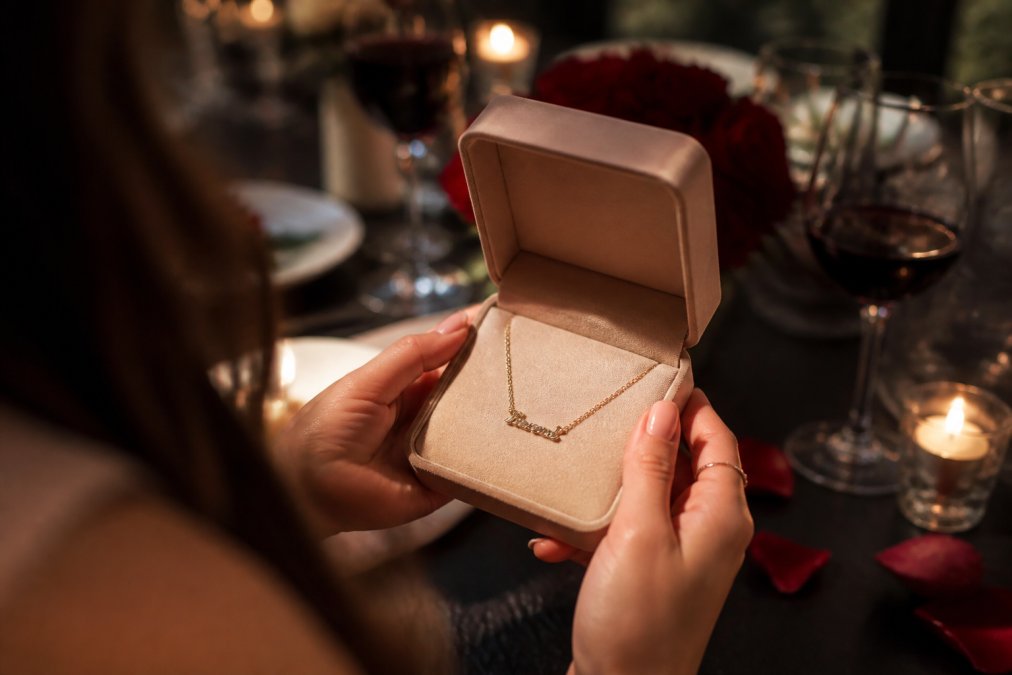
Anniversaries reward personalization more than almost any other occasion, because the point is commemorating a shared timeline. A date, a name, or a set of initials carries the relationship's history inside it.
The Gift-Giver's Paradox: Why Thoughtful Presents Feel Riskier to Give
Here's the counterintuitive part. The more thought you put into a gift, the more exposed you feel giving it. A generic present can't fail, because it never tried. A personalized one can fail loudly, and that asymmetry makes givers hesitate.
Budget-Friendly Personalization: Meaningful Gifts Under $60
Personalization is not a premium feature. Some of the most effective custom gifts sit well under $60, putting them in reach for birthdays, graduations, and just-because occasions.
A few options that fit the budget:
- A custom name necklace in polished stainless steel
Cultural Variations in Gifting and What They Teach Us About Connection
Most gift guides treat culture as a footnote. That's a mistake: gifting rules vary enough across traditions that a personalized present can land beautifully in one context and awkwardly in another. Understanding the variation separates a thoughtful giver from a lucky one.

Three Patterns That Show Up Across Traditions
Pattern 1: The thought-over-price tradition. In many East Asian gifting customs, perceived thoughtfulness matters more than monetary value, and overly expensive gifts create discomfort because they imply an obligation to reciprocate at the same level. A personalized item fits well because its value is visibly tied to attention rather than cost: a name necklace with a handwritten note reads as thoughtful; a luxury watch with no personal detail reads as pressure.

What the Variation Actually Teaches
What stays constant across all three patterns is the underlying function: gifts mark relationships, saying "we are connected" in a language that doesn't require words. The variation is in the grammar, not the message.
How This Connects to Sustainable Gifting
This is also where sustainable gifting fits in. A personalized item that stays in someone's life for years doesn't get replaced every holiday, the opposite of the disposable present cycle, and that durability is part of what makes it feel meaningful in any culture.
Conclusion: Why Personalized Gifts Make Better Presents
Personalized gifts make better presents because they encode the relationship into the object. They prove attention, last longer, and resist the generic-present drift that sends most gifts to a drawer within a year.
Frequently Asked Questions
What are the benefits of personalization in gift-giving?
Personalization turns a generic item into a keepsake that reflects the recipient's identity. A custom-engraved necklace or a nameplate with a meaningful date shows you paid attention, which strengthens emotional connection and makes the gift harder to discard. Research on gift-giving psychology consistently finds that recipients value the thought and effort behind a present more than its price tag. Personalized gifts also carry sentimental value that grows over time, so they stay meaningful long after the occasion passes.
How does personalization impact the perceived value of a gift?
Customization signals effort, and effort raises perceived value. When someone sees their own name, a shared anniversary date, or a private inside joke on an item, the gift stops being a product and becomes a testament to the relationship. That psychological shift means a $39.95 custom name necklace can feel more valuable than a $200 generic watch, because the recipient reads the personalization as evidence of thoughtfulness rather than a transaction.
What is the difference between personalized and customized gifts?
Personalized means the item carries something specific to the recipient, like their name, initials, or a meaningful date. Customized means the buyer changed the design itself, such as choosing a different font, metal finish, or layout. Many gifts are both. A name necklace with a chosen cursive font and an 18K gold finish is personalized and customized at once. For most shoppers, the personalization is what creates the emotional resonance; customization is the styling detail around it.
How can personalized gifts help commemorate important life milestones?
Milestones like graduations, anniversaries, new jobs, or a baby's birth deserve a marker that outlasts the event. A custom piece engraved with a graduation year or a couple's wedding date becomes a physical record of that moment. Because the item is made specifically for that milestone, it works as a lasting memory rather than a seasonal gift. Many people wear or display these pieces daily, which keeps the milestone present long after the celebration ends.


