


Last Updated: November 9, 2026
Quick Summary
Sustainable personalized gifts are worth choosing when the personal touch is paired with durable materials, because a gift people value is kept and used for years instead of replaced or discarded. Personalization alone does not make a gift sustainable; the material quality determines whether it lasts. Judging the recipient's likely use and the true cost per year of use helps decide if the higher price pays off.
- A personalized gift is harder to replace, so it is more likely to be kept and used for years.
- Personalization alone does not make a gift sustainable; quality materials must also be used.
- Read fiber content and processing claims, since words like eco-friendly and natural are marketing terms.
- Compare cost per year of use, not the sticker price, when weighing a sustainable gift.
- Ask whether the recipient would keep the item without personalization; if yes, the personalization multiplies its value.
Table of Contents
- Why Personalized Gifts Are Getting a Sustainability Look
- The Core Benefits of Sustainable Personalized Gifts
- How Personalization Reduces Waste Compared With Generic Gifts
- Materials That Make a Personalized Gift Truly Sustainable
- The Emotional Payoff: Why Personal Gifts Are Kept Longer
- Price, Durability and the Real Cost of Choosing Sustainable
- Choosing Your Next Personalized Gift With Confidence
- Frequently Asked Questions
Why Personalized Gifts Are Getting a Sustainability Look
Shoppers who want a gift that feels personal are also asking whether it will end up in a landfill. Shoppers planning a Mother's Day, anniversary or birthday gift often ask this question. Sustainable personalized gifts are products that combine a custom touch with durable materials and a longer useful life, so the gift is kept rather than discarded.
The appeal is simple: a personalized item is harder to replace, which makes it more likely to be kept and used for years. This guide explains what that looks like in practice, which materials matter, and how to judge whether a sustainable personalized gift is worth the price for the person you have in mind.
The Core Benefits of Sustainable Personalized Gifts
The main benefit is that a personal gift carries a clear sentiment that generic gifts rarely do. A woven blanket with a family message or a piece of custom jewelry signals thought in a way that a store-bought item often does not.
Several practical benefits follow from that:
- Longer use. Items people value tend to stay in the home instead of being passed on or thrown away.
- Durability. Quality materials resist wear better than cheap alternatives.
- Lower replacement needs. A well-made keepsake reduces the urge to buy a new gift next year.
- Clear purpose. The gift is tied to a specific person, relationship or milestone.
How Personalization Reduces Waste Compared With Generic Gifts
Generic gifts are often bought as a default, which leads to duplicates, unwanted items and quick disposal. A personalized gift is chosen for one person, so it is less likely to be regifted or discarded.
Consider a common scenario: a mug bought for a parent with no connection to their interests. It may sit in a cabinet. A custom blanket that references a family tradition is more likely to be used every winter. That difference in use is where the waste reduction happens.
Personalization still has to be done carefully. Adding a name to a low-quality item does not make it sustainable. The personal element should be paired with materials that will last.
Materials That Make a Personalized Gift Truly Sustainable
Materials decide whether a personalized gift is a lasting keepsake or a short-lived novelty. Read our guide to why heirloom-quality blankets last for generations to see which fibers and weaves hold up best over time.
Here is how the most common personalized-gift materials compare on those dimensions:
- Organic cotton. Grown without synthetic pesticides and processed with stricter limits on chemical finishing than conventional cotton. It is soft, breathable and takes dye-based personalization well. The trade-off is water use during growing and the fact that cotton items wear out faster than wool or linen when used daily. Look for listings that state the fiber content and whether the yarn is organic, not just "cotton."
- Bamboo. Fast-growing and low-input as a plant, which is why it is marketed heavily as sustainable. The catch is processing: bamboo viscose and rayon go through a chemical-heavy route, while mechanically processed bamboo linen is far gentler. If a listing says only "bamboo" without naming the process, treat the sustainability claim as unverified.
- Recycled plastic (rPET). Diverts bottles and containers from landfills and can be recycled again in many municipal programs. It is durable and easy to personalize with printing. The weakness is that it is still plastic: it sheds microfibers when washed if used in textiles, and its end-of-life depends on local recycling infrastructure that varies widely across the U.S.
- Wool and cotton-loom weaves. Long staple fibers resist pilling and hold shape for years, which is why heirloom blankets are often woven rather than knit. Wool is naturally odor-resistant and needs less washing, which lowers its use-phase footprint. The trade-off is higher upfront cost and care requirements, many wool pieces are hand wash or dry clean only.
- Linen. Made from flax, which needs little irrigation and few pesticides, and the fabric strengthens with washing. It wrinkles, which some recipients dislike, but a linen keepsake can outlast several cotton equivalents.
- Wood and bamboo hard goods. Durable and repairable, and often finished with plant-based oils rather than lacquers. Check that the wood is FSC-certified if the listing makes a forest-management claim.
Gift wrap can be part of the same decision. Lynrix.com offers a Gift Wrap with Personalized Message at $7.95 for buyers who want a personal note with their gift.

For a family-focused keepsake, a To My Daughter - Heirloom Blanket at $59.99 is made from 100% cotton yarn with colorful fringe. The listing describes the blanket as a woven keepsake made from an image you supply.

Watch out: "eco-friendly," "natural" and "green" are marketing terms, so a claim on the front of a package does not tell you how the item was made. Read the fiber content, the personalization method and the care instructions before you buy.
The article compares the main personalized-gift materials on durability, sustainability trade-offs and care needs.
| Material | Key strength | Main trade-off |
|---|---|---|
| Organic cotton | Soft, breathable, takes dye-based personalization well | Water use in growing; wears faster than wool or linen |
| Bamboo | Fast-growing, low-input plant | Chemical-heavy processing unless mechanically processed |
| Recycled plastic (rPET) | Diverts bottles from landfills; durable | Sheds microfibers; end-of-life depends on local recycling |
| Wool and cotton-loom weaves | Resist pilling; hold shape for years | Higher upfront cost; often hand wash or dry clean only |
| Linen | Needs little irrigation; strengthens with washing | Wrinkles easily |
| Wood and bamboo hard goods | Durable, repairable, plant-based finishes | Check for FSC certification if forest claims are made |
The Emotional Payoff: Why Personal Gifts Are Kept Longer
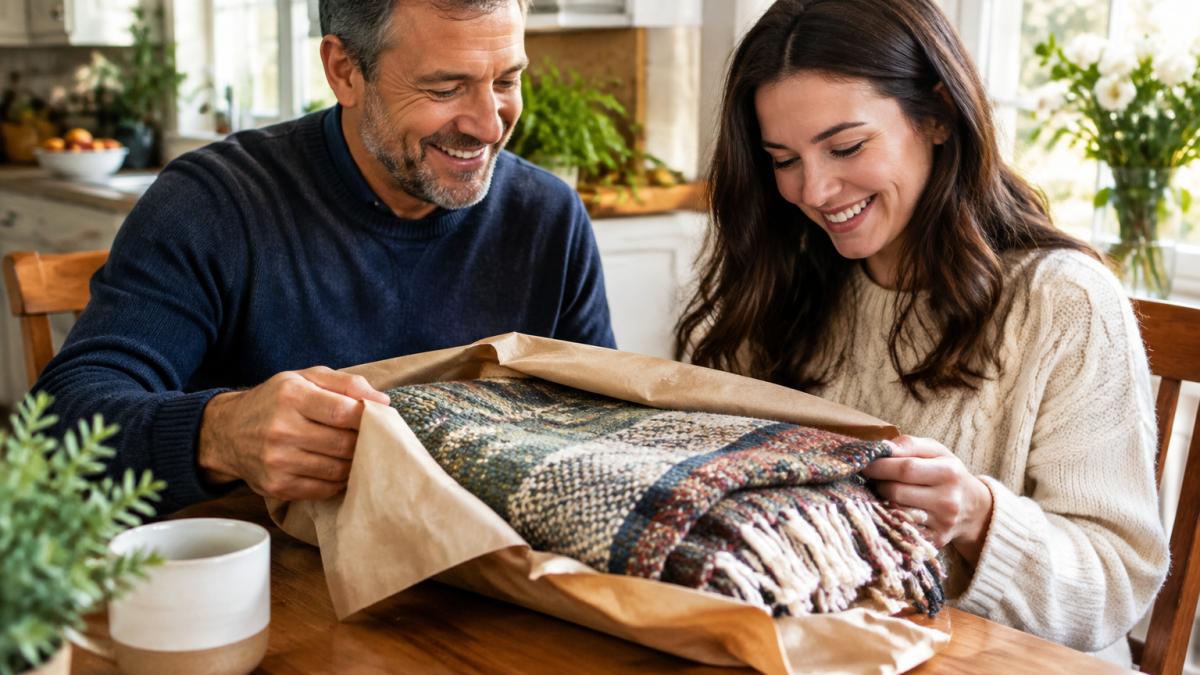
Many discussions of sustainable gifting focus on the business case and overlook the person opening the box. That is a mistake, because the environmental benefit of a personalized gift depends entirely on the recipient's emotional response. A gift that is loved is kept; a gift that is kept is not replaced; a gift that is not replaced is the whole point.
Consumer research points to several mechanisms behind this. Three stand out:
- The endowment effect. People assign more value to objects they perceive as theirs. A name, a date, a family photo or a handwritten message makes an item unmistakably the recipient's, which raises the value they place on it and makes them far less likely to discard it.
- The identity-signaling effect. People keep objects that reinforce who they are and who they belong to. A blanket woven with a family tradition or a piece of jewelry engraved with a milestone does that in a way a generic store-bought item cannot. The gift becomes part of the recipient's story rather than clutter in a cabinet.
- The effort heuristic. Recipients often read customization as a signal of time and care. Even when a maker produces the personalization, the perception that someone chose this item for this person can increase the gift's emotional weight.
Sustainability adds a fourth layer that generic personalization does not. When the recipient knows an item was made from durable, responsibly sourced materials, the gift carries a values message as well as a personal one. That combination, "this was chosen for me, and it was chosen with care for the world I live in", is what makes a sustainable personalized gift stick in a way that a novelty mug or a printed photo frame does not. It also makes the recipient more likely to care for the item properly, which extends its useful life further.
There is a practical test you can run before buying. Ask whether the recipient would keep the item if it had no personalization at all. If the answer is no, the personalization is doing all the work and the item is likely to be discarded once the novelty fades. If the answer is yes, a good blanket, a well-made piece of jewelry, a durable wooden keepsake, then the personalization multiplies the value of something already worth keeping. That is the difference between a personalized gift and a personalized novelty.
Watch out: personalization can backfire when it is too generic (a name slapped on a mass-market item reads as low effort) or too intimate (a message that assumes a closeness the relationship does not have can feel awkward). Match the depth of the personalization to the depth of the relationship, and let the material quality carry the rest.
Price, Durability and the Real Cost of Choosing Sustainable
Sustainable personalized gifts usually cost more upfront than mass-produced alternatives. The fair question is whether that extra cost pays off through durability and repeated use.
Compare cost per year of use rather than the sticker price alone. An item used every winter for ten years costs far less per use than a cheaper gift that is discarded after one season. If you are investing in custom jewelry, you can also learn how to protect and insure those pieces. Lynrix.com's catalog includes options such as Gift Wrap with Personalized Message at $7.95 and heirloom blankets priced at $59.99 and $79.99, so you can match the budget to the occasion.
Watch out: the cheapest personalized item is not always the best value. Check materials, dimensions and care instructions before deciding.
Choosing Your Next Personalized Gift With Confidence
Start with the recipient, then the material, then the personalization. A blanket suits a parent or partner who will use it daily. Jewelry or a keepsake suits a milestone. Gift wrap with a personal note can complete any gift.
Read each product listing for specifications, and buy when the material and personalization match what the recipient will actually keep. Before you buy jewelry, our buyer's guide to quality personalized jewelry explains what to check for in metal, finish and engraving. Explore the full range at Lynrix.com to find a personalized gift that will last as long as the relationship it celebrates.
Frequently Asked Questions
How are personalized products more sustainable?
Personalized products can reduce unsold stock, since a gift is chosen for a specific person. A gift chosen for a specific person is also less likely to be regifted, returned or discarded. Sustainability depends on the materials and production as well, so check whether the item uses natural or recycled fibers and whether the seller packages orders with minimal waste. Customization alone does not make a product green, but it removes much of the guesswork that drives generic gift overbuying.
What does “sustainable gifts” mean?
A sustainable gift is one that minimizes environmental and social cost across its life: the materials used, how it is made, how it is packaged and how long it lasts. In practice this means looking for durable construction, natural or recycled materials, minimal packaging and transparent sourcing. Sustainable gifting also includes choosing items the recipient will actually keep and use, since an unwanted gift carries the full environmental cost with no benefit.
How can personalized gifts reduce waste?
Personalized gifts reduce waste mainly by reducing duplicates and unwanted items. When a gift is chosen around a specific name, date or memory, the recipient is far less likely to return it or pass it along. Choosing a personalized gift wrapped with a personal note, instead of disposable wrapping, can further cut packaging waste.
How can I tell whether a gift is sustainably made?
Start with the materials listed on the product page, such as 100% cotton yarn or polyester fleece, and check whether the listing mentions recycled content or care instructions that suggest a long life. Look for clear product specifications and honest notes about how the item is made. Durable construction and easy care usually signal a gift meant to last years rather than one designed to be replaced quickly.


