


Table of Contents
- The Real Timeline: What to Expect from Your Custom Photo Blanket Turnaround Time
- Step-by-Step: How Long Each Stage of Making a Personalized Photo Blanket Takes
- Best Practices for Photo Blanket Design to Avoid Delays
- Personalized Gift Delivery Timelines: When to Order for Birthdays and Holidays
- DIY vs. Professional Printing: What Affects Production Speed and Quality
- Troubleshooting Image Quality: How to Fix Common Photo Issues Before Ordering
- Why Lynrix Heirloom Blankets Are Worth the Wait
- Frequently Asked Questions
Last Updated: September 14, 2026
The Real Timeline: What to Expect from Your Custom Photo Blanket Turnaround Time
Most custom photo blanket orders ship in one to three weeks, and the exact answer depends less on the printing itself than on how fast you approve your design. This guide from Lynrix.com breaks down every stage of the process, because "how long does it take to create personalized photo blankets" is really a question about the whole production cycle, not just the machine time.
Here's what surprises most first-time buyers: the loom or printer is rarely the bottleneck. Your own response time usually is. Below, we'll show you exactly how to compress each stage so a personalized photo blanket arrives when you need it.
Standard Production Windows
A typical custom photo blanket turnaround time runs 7 to 14 business days from approved proof to shipment (the FTC). Standard production windows assume your artwork is print-ready and you respond to the proof within 24 hours.
Orders placed during peak gift season, roughly late April through mid-May and November through December, often run longer because production queues fill up. Order processing slows when volume spikes, so build a buffer into your plans.
Rush Options and Express Shipping
Rush production shortens the print and finishing stage, but it cannot shorten the time you spend approving artwork. Express shipping then compresses the delivery window after the blanket leaves the facility.
Two levers exist, and they work independently:
- Rush production: moves your order up the queue for printing and finishing
- Express shipping: shortens transit time once the package ships
Using both is the only way to hit a tight deadline reliably.
Step-by-Step: How Long Each Stage of Making a Personalized Photo Blanket Takes
Each stage of making a personalized photo blanket has its own clock, and knowing them helps you plan backwards from your gift date. The table below summarizes the typical timeline.
| Stage | Typical Duration | What Slows It Down |
|---|---|---|
| Photo upload and prep | 15-30 minutes | Large files, low-resolution images |
| Design proofing and approval | 24-72 hours | Slow customer response |
| Printing, weaving, finishing | 3-7 business days | Peak-season queue volume |
| Shipping and delivery | 2-7 business days | Distance, carrier delays |
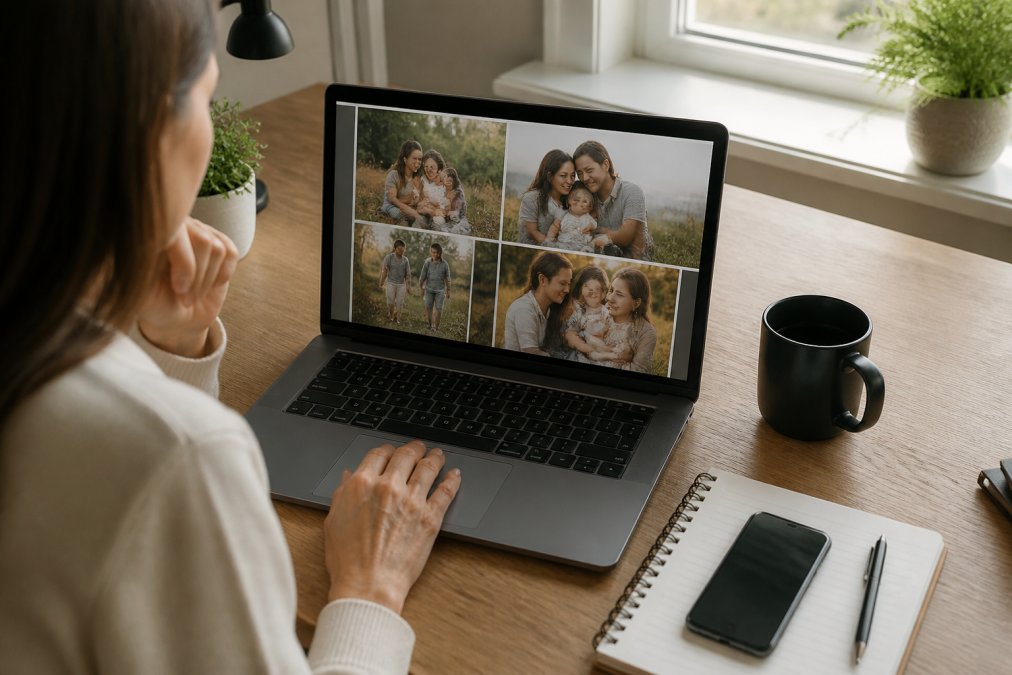
Step 1: Uploading and Preparing Your Photos
Uploading takes minutes, but preparing the right files takes longer if your images need work. High-resolution image files upload faster on a stable connection and produce cleaner results.
Gather your photos before you start. Choosing images mid-upload is the most common cause of abandoned carts and restarted orders.
Step 2: Design Proofing and Approval
Proofing is where most of the calendar time disappears. A designer prepares your custom layout, you review it, and production begins only after you approve.
Check every proof carefully: spelling of names, dates, photo cropping, and text placement. A single revision cycle typically adds a day.
Step 3: Printing, Weaving, and Finishing
Production itself is the most predictable stage. Woven blankets are produced on a loom, followed by finishing and quality checks.
Best Practices for Photo Blanket Design to Avoid Delays
Delays almost always trace back to the artwork, not the production line. The single most common cause of a stalled order is a photo that looks fine on a phone screen but cannot print sharply at blanket size. This section covers the technical specifics that prevent that outcome.
Image Resolution: What DPI Actually Means for a Blanket
DPI (dots per inch) describes how densely a printer lays down ink. For a woven photo blanket, the practical target is 150 DPI at the final print size as a minimum, with 300 DPI preferred where the weave itself softens fine detail (nist.gov).
Here is the math that matters: a 4x6 photo from a phone is often around 3000 x 2000 pixels. Printed at 150 DPI, that file can cover roughly 20 x 13 inches without upscaling. Printed at 300 DPI, the same file covers about 10 x 6.5 inches. If your blanket template is larger than that, the file will be stretched and the print will look soft.
A quick check: divide the pixel width of your image by the target print width in inches. If the result is below 150, the image is too small for that template.
File Types and What to Send
- JPEG: fine for photos, but each save compresses and degrades the file. Send the original, not a re-saved copy.
- PNG: best for images with text or logos because it preserves sharp edges without compression artifacts.
- HEIC: common on newer phones. Convert to JPEG or PNG before uploading, since some order systems do not accept HEIC.
- PDF: useful for a finished layout with text, but not for individual photos.
Avoid screenshots. A screenshot captures the screen resolution, not the original image resolution, so a photo that was 3000 pixels wide becomes a 400-pixel-wide screenshot.
Aspect Ratio and Cropping
Blanket templates come in fixed shapes: square, rectangular, and occasionally round. A wide photo dropped into a square template gets cropped, and the crop is often centered, which can cut off faces.
Before uploading, crop the photo yourself to match the template's aspect ratio. Keep faces and important details at least 10 percent away from the edges so a slight trim during finishing does not clip them.
Common Problems and Their Fixes
- Pixelation: caused by enlarging a small file. The fix is a larger source file, not a sharpening filter. Sharpening adds contrast at edges; it cannot invent detail that was never captured.
- Blur: usually motion blur or missed focus in the original. No software can fully recover it. Choose a different photo.
- Color that looks off: screens vary in calibration. Check the file on a second device before assuming the print will be wrong. Heavy filters and saturation boosts often print worse than they look on screen.
- Dark or backlit shots: brighten slightly, but avoid pushing shadows so far that noise appears. A modest lift is safer than a dramatic one.
- Text that disappears: thin fonts and light colors vanish on a woven texture. Use bold, high-contrast text.
Template and Layout Choices
A clean, simple layout proofs faster than a complex collage with dozens of elements. Fewer, larger photos generally read better on a woven blanket than a dense grid, because the weave softens small details.
Match the template to your photo count. If you have three good photos, use a three-panel layout rather than padding the design with weaker images. Empty space is better than a blurry filler photo.

Personalized Gift Delivery Timelines: When to Order for Birthdays and Holidays
Order at least three weeks before a birthday and four to five weeks before a major holiday to allow for production and shipping. Personalized gift delivery timelines are unforgiving because a late blanket has no substitute.
Work backwards from the date you need the gift in hand, not the date of the event. Add a buffer for carrier delays during peak periods.
For Mother's Day and Father's Day, place orders a month ahead. For anniversaries with fixed dates, treat the deadline as immovable and order early.
DIY vs. Professional Printing: What Affects Production Speed and Quality
Most guides on personalized photo blankets are either pure product pages or pure craft tutorials. This section does what neither does: it compares the two paths side by side so you can pick based on your skill level, deadline, and how the finished blanket will be used.
Time Comparison: DIY vs. Professional
| Path | Hands-On Time | Calendar Time to Finished Blanket |
|---|---|---|
| DIY iron-on transfer | 1-3 hours of active work | Same day to 2 days |
| DIY print-at-home fabric | 2-4 hours including test prints | 1-3 days |
| Professional sublimation print | 15-30 minutes uploading and approving | 7-14 business days |
| Professional woven blanket | 15-30 minutes uploading and approving | 2-4 weeks |
The professional path wins on predictability: once your proof is approved, the production window is fixed, whereas a DIY project can stall on a failed transfer, a jammed printer, or a fabric sheet that feeds crooked.
Cost Comparison
DIY costs are front-loaded into supplies. A pack of iron-on transfer sheets, a blank fleece throw, and a color printer with adequate ink typically runs less than a single professionally printed blanket, but the per-unit cost only beats professional printing when you are making several items from the same supply pack. For one blanket, the supply cost and the professional price land in a similar range, and the professional version arrives finished.
Professional pricing bundles the fabric, the weave, the finishing, and the quality check into one number. There is no separate line for the blank, the transfer medium, or the ink.
Quality and Durability
This is where the two paths diverge most.
- Color vibrancy: Sublimation printing bonds dye into the fabric fibers, so the image does not sit on top of the surface and crack or peel. Iron-on transfers sit as a layer on top and can lift at the edges after repeated washing.
- Edge-to-edge printing: Professional presses handle full-bleed layouts. Home irons rarely reach the edges evenly, which leaves a visible border.
- Fabric durability: A woven cotton blanket is built to survive years of machine washing. A DIY transfer on a thin polyester throw tends to fade faster.
- Consistency: Professional proofing catches cropping and resolution problems before production. DIY gives you one shot per sheet.
Factors Affecting Production Speed
If you go the professional route, three variables drive how fast your order moves:
- Order volume. Peak gift season fills production queues, and a shop that runs 7-day turnaround in February may run 14 days in December.
- Material choice. Fleece and plush finish quickly. Sherpa lining and heavier woven cotton add handling and finishing time.
- Revision cycles. Each proof revision adds roughly a day. A design approved on the first pass is the fastest possible order.
Which Path Fits You
Choose professional printing if the blanket is a gift with a fixed date, if the photo matters, or if you want a finished piece that survives regular washing. The professional path costs more calendar time but removes the risk of a ruined transfer on the day you needed the gift.
Troubleshooting Image Quality: How to Fix Common Photo Issues Before Ordering
Most image problems can be fixed before you order, which saves a full revision cycle. Catching them early is the fastest way to protect your timeline.
Pixelation happens when a small image is enlarged. The fix is to start with a larger source file, not to sharpen a small one.
Common issues and their fixes:
- Blurry photos: use a sharper original; software sharpening cannot add detail
- Wrong aspect ratio: crop deliberately to match the template before uploading
- Color that looks off: check the file in a neutral viewer; screens vary
- Dark or backlit shots: brighten slightly, but avoid heavy filters
A quick check at full zoom reveals most problems. If a face looks soft when enlarged, it will look soft on the blanket.
Why Lynrix Heirloom Blankets Are Worth the Wait
Lynrix.com produces heirloom woven blankets on a loom using cozy 100% cotton yarn, which is why the finished piece holds up as a customized keepsake rather than a novelty print. Products like the To My Daughter Heirloom Blanket and the Life is Better With You Heirloom Blanket are made to mark birthdays, anniversaries, and milestones.

The wait reflects real production, not delay. A woven blanket is a gift-ready item built to last, and a machine washable cotton weave stays soft through repeated use.
U.S. Federal Trade Commission guidance on online shopping and delivery claims
Frequently Asked Questions
How long does it take to get a photo blanket made?
Most personalized photo blanket orders take 3 to 7 business days for production after you approve the design proof. Standard shipping adds another 3 to 5 business days. If you need it faster, many companies offer rush production and express shipping for an extra fee. Always check the specific turnaround time on the product page before ordering, especially during peak gift-giving seasons like Mother's Day or Christmas.
Does the material of the blanket affect production time?
Yes, material can impact how long your custom photo blanket takes to make. Woven blankets like Lynrix Heirloom Blankets involve additional steps, such as loom weaving and edge finishing, which can add 1 to 2 business days. If you are on a tight deadline, ask about production windows for each fabric type.
What factors cause delays in custom photo blanket orders?
Common delays include low-resolution images that require editing, slow design proof approvals, and high order volume during holidays. Weather events and carrier backlogs can also extend shipping. To avoid setbacks, upload high-resolution photos (at least 300 DPI), respond to proof emails quickly, and order at least two weeks before your event. If you are ordering in bulk, factor in extra processing time for large orders.
Are there expedited shipping options for personalized gifts?
Many online retailers, including Lynrix, offer express shipping at checkout for an additional cost. Express shipping typically reduces transit time to 1 to 2 business days after production. Keep in mind that rush production may also be available for an extra fee, but it depends on current order volume. If you need a personalized gift by a specific date, contact customer service before placing your order to confirm the fastest possible timeline.
Creating a personalized photo blanket on a tight deadline comes down to one thing: giving yourself enough runway before the date that matters. Lynrix.com makes that easier with heirloom woven blankets crafted from 100% cotton yarn, personalized gift options for every milestone, and a range of keepsakes built to be treasured. Get started with Lynrix.com and turn your favorite photos into a customized keepsake worth the wait.


